Digital Twins for Architecture, Engineering & Construction
Why AEC Teams Are Adopting Digital Twins
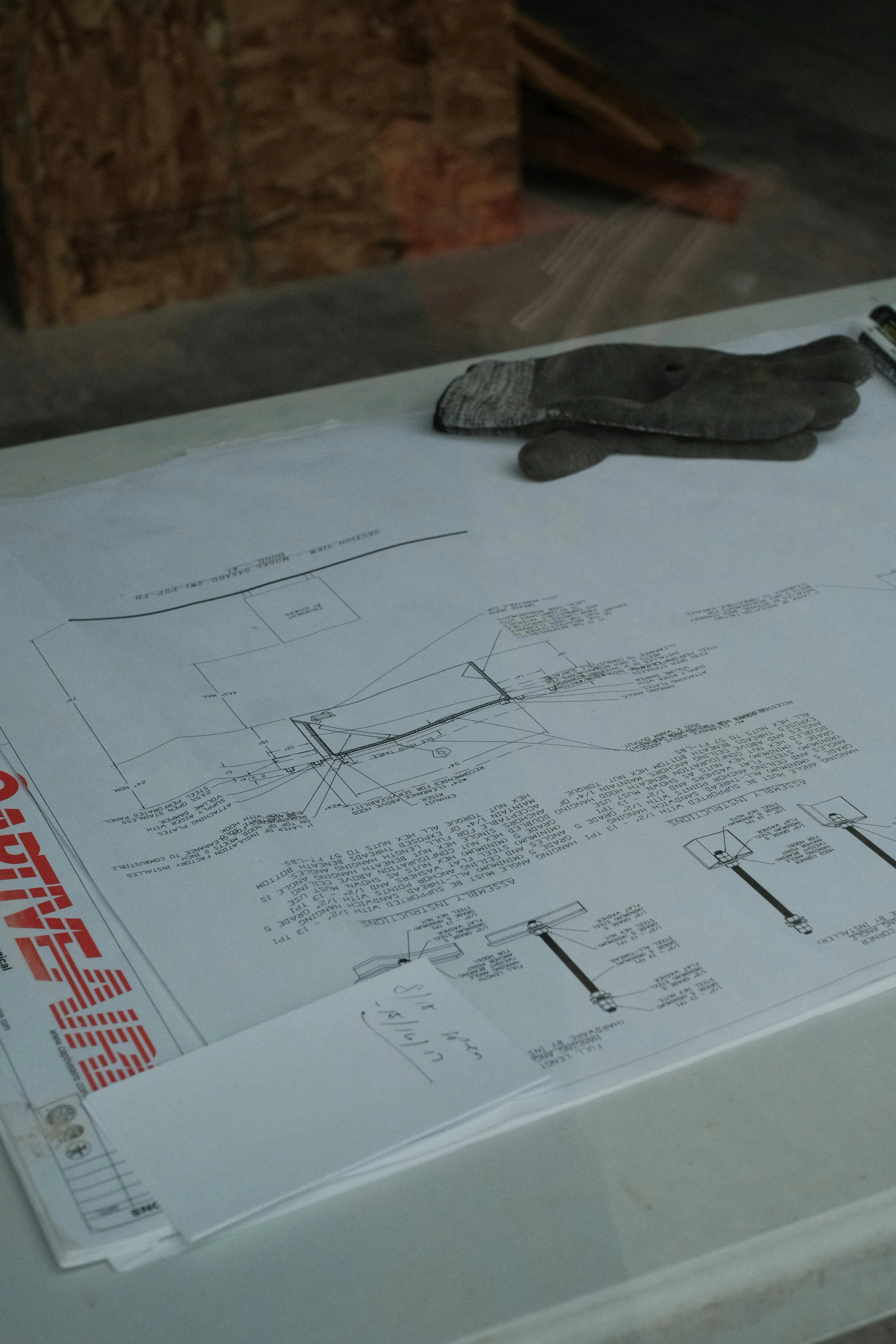
The numbers are clear. Construction rework accounts for 5–15% of total project costs globally. Disputes over as-built conditions contribute to 25% of construction delays. And an estimated 52% of rework is caused by poor project data and miscommunication.
Digital twins don't just document buildings. They eliminate the ambiguity that causes these problems.
A TWINFLOW digital twin is a photo-realistic, dimensionally accurate 3D model of a real-world space — updated at key project milestones to create a living, navigable record of your asset from first survey through to handover and beyond.
How Digital Twins Fix Your Workflow
The built environment is changing. The way you document it should too.
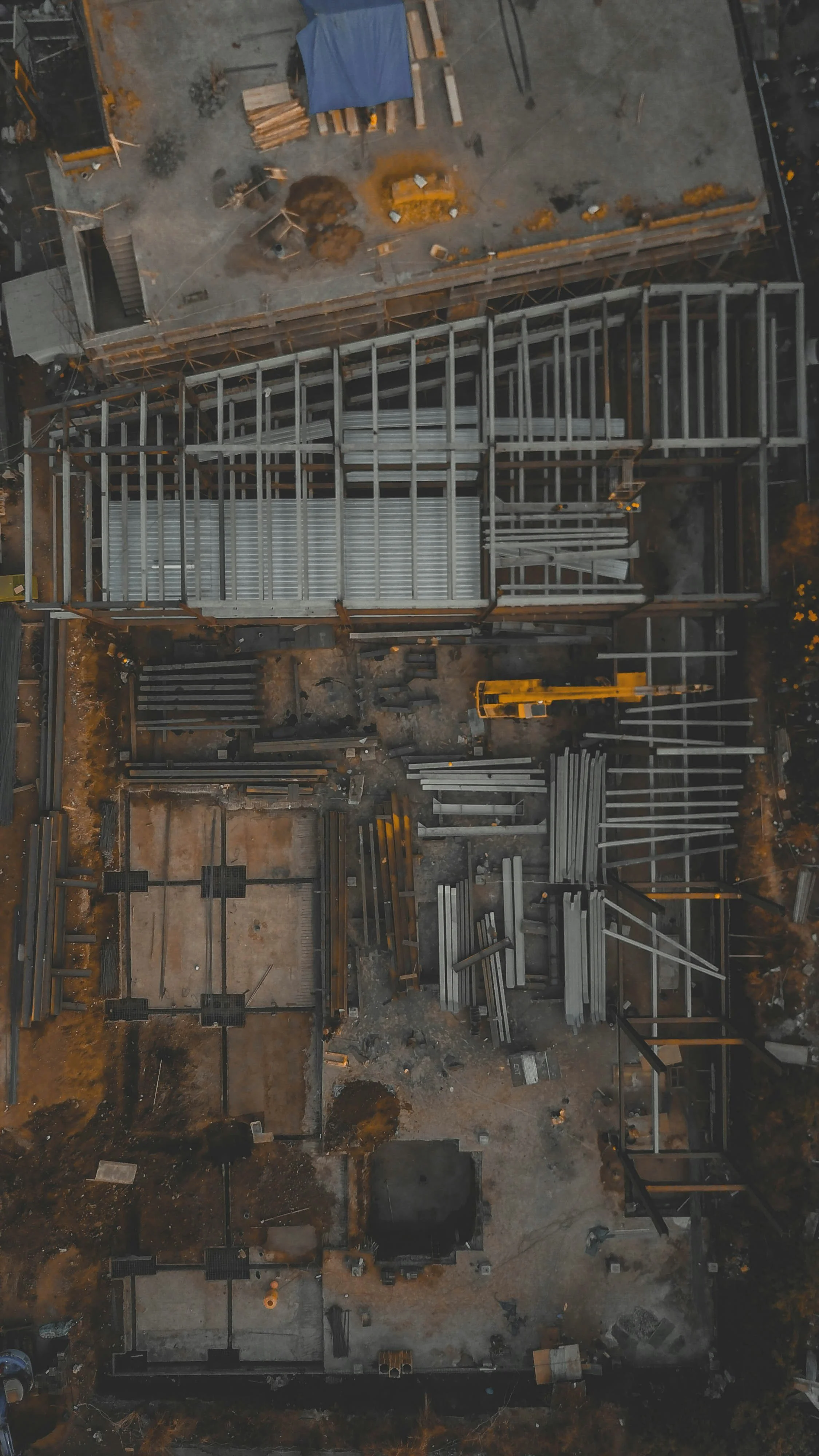
Construction projects are getting bigger, faster, and more complex. Yet most AEC teams are still relying on 2D drawings, email chains, and site visits to manage multi-million-pound programmes. The result? Costly rework. Missed defects. Disputes over what was built and when.
TWINFLOW changes that.
We deploy spatial digital twin technology across every stage of the design and construction lifecycle — giving your teams a single, photo-realistic, measurable record of the built environment that everyone can access, anywhere, at any time.
-
Before a single line is drawn, you need to know exactly what you're working with.
Traditional measured surveys are expensive, slow, and rarely capture the full picture. A TWINFLOW scan of an existing building or site gives your design team a complete, accurate 3D record they can interrogate remotely — at any point in the project — without ever returning to site.
Every space is measurable. Every surface is visible. Floor-to-ceiling heights, corridor widths, plant room layouts — all accessible without a tape measure.
The impact:
Eliminate repeat site visits for design information gathering
Reduce survey costs by up to 40% versus traditional measured survey methods
Give architects and engineers remote access to precise spatial data from day one
Spot constraints and clash risks before they become expensive problems
-
Great design requires great spatial understanding. Digital twins give your design team a navigable reference model they can return to throughout the design process — checking dimensions, verifying spatial relationships, and sense-checking proposals against reality.
When integrated with BIM tools like Autodesk Revit or Navisworks, TWINFLOW scans can be used to validate model accuracy against the as-built condition — catching coordination errors before they reach site.
Specific use cases:
Overlay point cloud data with BIM models to identify clashes between services and structure
Validate existing ceiling heights, structural bays, and column positions before committing to a design
Provide accurate floorplate data for retrofit and refurbishment projects where original drawings no longer reflect reality
Support planning submissions with photorealistic site context models
The impact:
Clash detection at design stage costs 10–100x less to resolve than the same issue discovered on site
Reduce design team requests for information (RFIs) caused by inaccurate existing conditions data
Improve design confidence and reduce abortive work
-
Once build starts, keeping track of what's been done — and whether it's been done correctly — is a full-time job.
TWINFLOW implements a programme of regular 3D scans at agreed project milestones, creating a timestamped visual record of construction progress. Project managers, clients, and remote stakeholders can walk the site virtually at any time, without needing to be present in person.
Each scan becomes a permanent, navigable snapshot in time. Compare scans side by side. Verify that work matches approved drawings. Flag deviations before they're buried behind the next layer of finishes.
Specific use cases:
Monthly or phase-by-phase progress scans for client reporting
Documentation of concealed works (MEP routes, structural fixings, underfloor services) before they are covered up — critical for future maintenance and insurance purposes
Remote progress reviews for clients, consultants, and stakeholders who can't visit site regularly
Visual audit trail to support interim payment applications and milestone sign-offs
The impact:
Cut non-productive site visits by up to 50% through remote access for off-site stakeholders
Build a permanent, legally defensible record of construction progress
Identify construction deviations up to 2–3 weeks earlier than traditional inspection processes
-
Defects found late cost more to fix. It's that simple.
TWINFLOW digital twins enable structured, location-linked QA/QC workflows directly within the 3D model. Issues can be logged, photographed, and assigned — all tagged to their precise spatial location. No more deciphering vague snagging descriptions like "second floor, near the east staircase."
Your site team walks the floor with a tablet. Issues get pinned directly inside the twin. The contractor gets an exact, navigable location. Sign-off is tracked in the same system.
Specific use cases:
Structured snagging and defect management within a navigable 3D model
Photo and annotation tagging at precise locations for clear contractor instruction
Pre-handover sign-off walkthroughs for client teams to review and approve remotely
Defects liability period documentation — providing timestamped evidence of asset condition at practical completion
The impact:
Reduce snagging resolution time through precise, unambiguous defect location data
Improve first-fix rates by giving contractors clearer, spatially-accurate instructions
Protect against post-handover disputes with a complete condition record at practical completion
-
Digital twins don't exist in isolation. They connect directly to the tools your teams already use.
TWINFLOW scans integrate with leading AEC platforms — including Autodesk Revit, Navisworks, AutoCAD, and Procore — allowing you to bring 3D spatial context into your existing project management and design workflows without switching platforms.
Point cloud data, floor plans, and dimensioned exports can be generated directly from the twin, reducing the manual effort of translating site surveys into usable CAD geometry.
Specific use cases:
Export accurate floor plans and section cuts for import into CAD/BIM software
Generate point cloud data for Revit model creation and validation
Embed digital twins within Procore projects for construction progress tracking
Use scan data to populate or verify asset registers and facility management databases at handover
The impact:
Eliminate manual re-drawing of as-built conditions
Reduce modelling time from existing surveys by up to 60%
Improve BIM model accuracy and reduce co-ordination errors on site
-
What gets handed over at the end of a project is often shockingly incomplete. PDFs, zipped folders, and paper O&M manuals don't tell you where the isolation valve is or what's hidden inside that ceiling void.
A TWINFLOW handover package gives the facilities and asset management team something they can actually use — a photo-realistic, navigable 3D record of the completed building with documentation, equipment data, and maintenance information linked directly to location.
This isn't a document library. It's a living spatial interface for the building.
Specific use cases:
Deliver a fully navigable as-built digital twin as part of the contractual handover package
Attach O&M documentation, equipment datasheets, and warranties directly to assets within the model
Provide incoming FM teams with a complete, spatially-accurate record of the building — from day one of occupation
Establish a baseline model for ongoing facilities management, future refurbishment planning, and capital works
The impact:
Reduce FM team onboarding time with intuitive, visual building documentation
Eliminate the common scenario where as-built information is lost, incomplete, or out of date within 12 months of handover
Create the foundation for an ongoing asset management digital twin — delivering value far beyond the construction programme itself
Implementation: How It Works
TWINFLOW digital twin programmes are designed to integrate with your existing project workflow — not disrupt it.

Stage 1 — Survey & Capture
We carry out 3D LiDAR scanning of the site or building at agreed project milestones using professional-grade scanning hardware. Scan programmes are tailored to project scale, access requirements, and programme timelines.


Stage 2 — Processing & Publishing
Scans are processed and published to a cloud-hosted digital twin platform within 24–48 hours of capture. All stakeholders receive access via browser — no software installation required.
Stage 4 — Ongoing Scanning & Management
For longer programmes, we manage the scanning schedule throughout the project lifecycle — ensuring your twin stays current and the project record remains complete.


Stage 3 — Integration & Workflow Setup
We configure the twin for your project workflow — connecting to your BIM, project management, or FM platform as required. Issue-tracking, QA/QC workflows, and annotation tools are set up and your team is onboarded.
Stage 5 — Handover Package
At practical completion, we deliver a fully documented handover digital twin with all linked data, ready to transfer to the client, FM team, or asset manager.
ROI: The Business Case for Digital Twins in AEC
The return on investment from digital twin programmes in construction is well-documented:
Rework reduction: Digital twin-enabled QA/QC processes consistently reduce rework costs by 10–25% on complex projects
Site visit savings: Remote access for stakeholders reduces non-essential site visits — with typical savings of 2–4 visits per consultant per project on larger programmes
Dispute resolution: A complete, timestamped visual record significantly reduces the cost and duration of contractual disputes — with documented cases of six-figure savings on complex commercial projects
FM value: The asset management value of a well-structured handover twin typically exceeds the cost of the entire scanning programme within the first year of occupation
For a £10 million construction project, a TWINFLOW digital twin programme typically represents less than 0.3% of total project value — while protecting against risks that commonly exceed 5–15% of the same budget.
ROI: The Business Case for Digital Twins in AEC
The return on investment from digital twin programmes in construction is well-documented - and the numbers consistently tell the same story.

10-25%
Rework Reduction
Digital twin enabled QA/QC processes consistently reduce rework costs by 10-25% on complex projects.
6-Fig.
Dispute Savings
A complete, timestamped visual record significantly reduces the cost and duration of contractual disputes - with documented six-figure savings on complex commercial projects.
2-4
Sites Visits Saved Per Consultant
Remote stakeholder access reduces non-essential sit visits - saving 2-4 trips per consultant, per project on larger programmes.
Yr 1
FM Payback Period
The asset management value of a well-structured handover twin typically exceeds the cost of the entire scanning programme within the first year of occupation.
THE BOTTOM LINE
Less than 0.3% of the project value.
Protection against risks of 5-15%
Past Project
The Atlas Project
A bold reimagining of a timeless brand.