

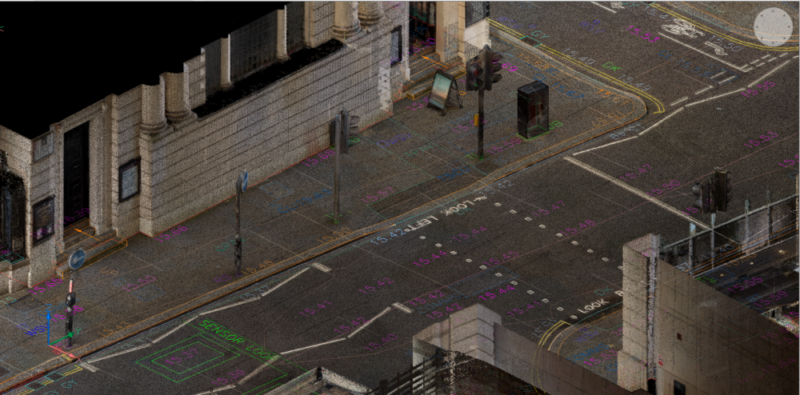
Every capture brand has a job it does better than the rest.
We work across all of them. Matterport, NavVis, Leica, FARO, Trimble, DJI, XGRIDS and more, sourced through a network of specialist capture partners. That means we can put the right device on your site instead of the one we happen to own.
Ask a manufacturer what you need, and the answer is always the thing they make.
That is not dishonesty. It is structure. A capture brand employs people whose job is to sell their range, and their range is genuinely excellent at the things it was built for. The problem is that no manufacturer will tell you when their device is the wrong tool, because they have nothing else to offer you.
Twinflow does not manufacture, resell or hold stock. We work through a network of specialist capture partners, which between them run the full spread of technology on this page. When we scope a site, the device choice comes from the requirement rather than from what is sitting in our van.
Range
A hospital estate might need wearable mobile mapping for the ward floors, a tripod scanner for the plant rooms, drone thermal for the roof and a handheld unit for a listed façade. That is four brands and three capture methods on one site. Going direct, that is four procurements, four site inductions and four data sets that do not line up. Through us it is one scope, one programme and one deliverable.
Price points
The gap between the cheapest and most expensive way to capture the same building is enormous, and most of the time the cheapest defensible option is the right one. Documentation of a retail unit does not need the same instrument as structural verification of a rail bridge. Knowing where the line sits, and being willing to recommend the cheaper side of it, is the single biggest saving we deliver.
Honesty about limits
We will tell you when a technology cannot do what a brochure implies. Some outputs look photorealistic but are not measurable. Some accuracy figures describe internal consistency rather than real-world position. Nobody selling the hardware is going to open that conversation with you.
Seven specialist partners. One neutral selection.
We work through a network of all major capture brands and technologies. Each brings different strengths to different problems. The choice of which to use on your site comes from the requirement, not from what sits nearest to hand.
Click each brand card to read the full background, context, and our assessment.
The capture market has changed hands three times in three years.
Matterport was acquired by CoStar in February 2025. FARO was acquired by AMETEK in July 2025 and delisted. Hexagon separated its software business from its hardware business in May 2026, putting Leica instruments and the software they feed on different balance sheets. NavVis raised 85 million dollars in August 2026 and is moving up the stack into data platforms.
None of that is a criticism of any product. It is a reminder that the roadmap you buy into today is owned by someone whose priorities may change. Standardising an entire estate on one manufacturer is a bet on a corporate strategy you have no visibility of.
We build capture programmes so that the data survives the vendor. Open formats, documented processing, ownership written into scope.
Five questions before anyone picks up a scanner.
Every site is different, and the right capture method depends on five practical questions that come before any hardware decision. The question is never "what scanner should we use?" It is always "what do we need to deliver, in what timeframe, and what constraints does the site impose?"
Click through the questionnaire below to see how we think about this. Your answers will point toward the method we would recommend.
Accuracy is three separate numbers, and the industry uses one word for all of them.
A spec sheet quoting "5mm accuracy" could mean any one of the three things below, and manufacturers rarely specify which. That ambiguity is where budgets go wrong: a scan can hit its quoted number and still be useless for the drawing it was commissioned to produce. Here's what each one actually measures.
Offset from grid
How internally consistent a scan is with itself. It's the number most commonly quoted and the easiest for a manufacturer to achieve.
But it says nothing about where the scan actually sits in the real world, shown here as the dashed shape: consistent in shape, but offset from the true grid.
Correct position
How well the scan agrees with real-world coordinates. It needs control points or GNSS correction to achieve.
Without that correction, a scan can be beautifully consistent and in completely the wrong place, shown here as the shape landing exactly on the true grid once corrected.
~1-2cm fuzzy shell on surface
The thickness of the fuzzy shell a scanner produces on a flat wall, usually one to two centimetres.
It sets a hard floor on what any downstream measurement can claim, no matter how accurate the relative or absolute numbers say the scan is.
There is a fourth thing worth saying plainly. A gaussian splat is a rendering, not a measurement. It can be extraordinarily convincing and completely unsuitable as a basis for a dimensioned drawing.
We write acceptance tests into capture scopes that check all of this on delivery. Taped distances against the model, RMSE against independent check points, wall shell thickness on a known flat surface. It takes an hour and it is the difference between data you can rely on and data you assume you can.
Most sites need more than one.
The interesting projects are almost never a single device. They are a combination, sequenced so that each method does the part it is best at and nothing is captured twice.
Wearable mobile mapping across teaching floors and circulation, because floor area is the constraint. Tripod scanning in plant rooms and risers where detail is critical and space is tight. Drone thermal on roofs ahead of a retrofit business case. One coordinated data set, three technologies, one deliverable.
Fast repeatable capture across every store for space documentation and remote planning, at the lowest defensible cost per unit. Higher-accuracy capture on the handful of flagship or listed properties where a full model is being produced. Deliberately different standards for different assets, because uniform specification across a portfolio is almost always over-specified somewhere and under-specified somewhere else.
Mobile mapping through wards and corridors during limited access windows. Detailed scanning of critical plant. Thermal drone survey on the roof line. Close-range capture of specific equipment for replacement planning. Sequenced around clinical activity rather than around what suits the surveyor.
None of those combinations are available if you buy direct from a manufacturer. Each one would be three or four separate procurements, three or four site inductions, and three or four data sets that someone then has to reconcile.
The oldest brand we work with predates photography. The newest is four years old.
1819, the Swiss instrument-making lineage that becomes Leica Geosystems begins. 1978, Trimble is founded on satellite positioning. 1981, FARO starts out building medical measurement systems. 2006, DJI is founded in Shenzhen. 2011, Matterport makes 3D capture something anyone can do. 2013, NavVis spins out of a Munich university lab. 2022, XGRIDS begins building capture around gaussian splatting.
Two centuries of engineering and four years of it now sit on the same shortlist. That is the market we help clients navigate.
Want the numbers instead of the background?
This page covers what each brand is, where it came from and what it is genuinely good at. If you are past that and want range, accuracy, capture speed and indicative cost side by side, the technical comparison has it.
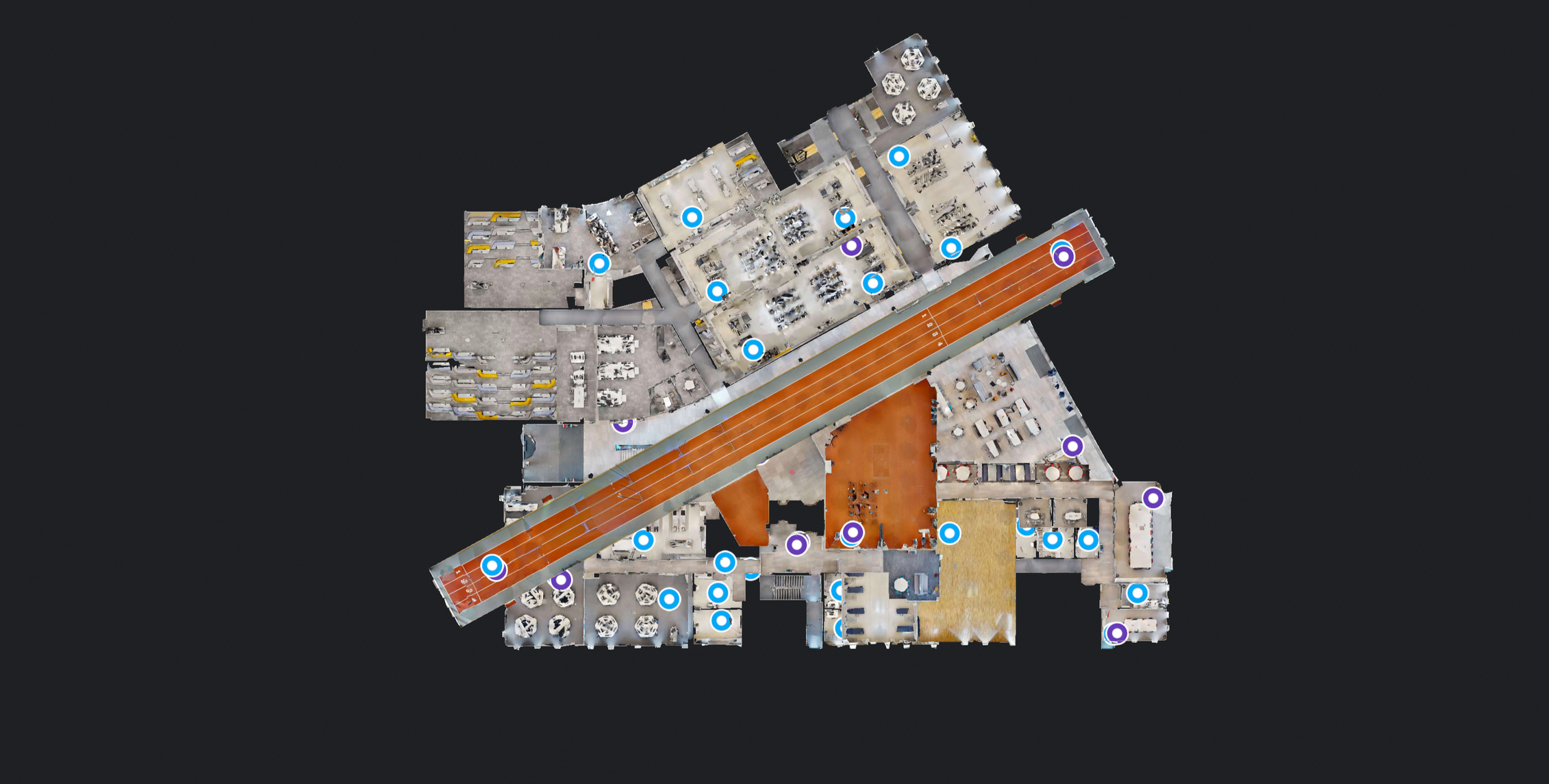
Tell us the building, not the brand.
Most people arrive at this page having already been quoted by one manufacturer or capture firm and wanting a second opinion. That is a good instinct, and it is a conversation we are happy to have whether or not you end up working with us.
Tell us what the building is, what you need at the end of it and what the constraints are. We will tell you what should capture it, roughly what that costs, and where the quote you are holding is over or under specified.