
Construction Handoff Done Right: Using Digital Twins to Bridge the Gap Between Build and Operations
How intelligent building models create seamless transitions from construction to facility management—and why that matters more than you think.
The moment when keys change hands from contractor to building owner should be a celebration. The project is complete, the building is ready, and operations can begin. Instead, for most construction projects, handoff is where the nightmare begins.
Building owners receive boxes of paper documentation—O&M manuals, as-built drawings, warranty certificates, equipment specifications—that may or may not reflect what was actually built. Facility managers inherit incomplete maintenance histories, missing asset data, and drawings that don't match reality. Critical information lives in contractors' filing cabinets or, worse, only in retiring workers' heads. The result? An estimated 30% of construction data is lost during commissioning and handover, costing the industry $1.8 trillion globally in inefficiencies.
This isn't just an inconvenience—it's a systemic failure that undermines the entire value proposition of modern buildings. All the effort invested in design, all the coordination during construction, all the equipment and systems carefully installed...and when it comes time to actually operate and maintain the facility, the knowledge to do so effectively has vanished.
Digital twins are fundamentally changing this equation. By creating persistent, intelligent 3D models that capture and preserve construction data throughout the entire project lifecycle, digital twins eliminate the traditional handoff chasm. The virtual building that guided construction becomes the operational asset that empowers facility management. This isn't a future vision—it's happening now, delivering measurable results for organizations that have made the transition.
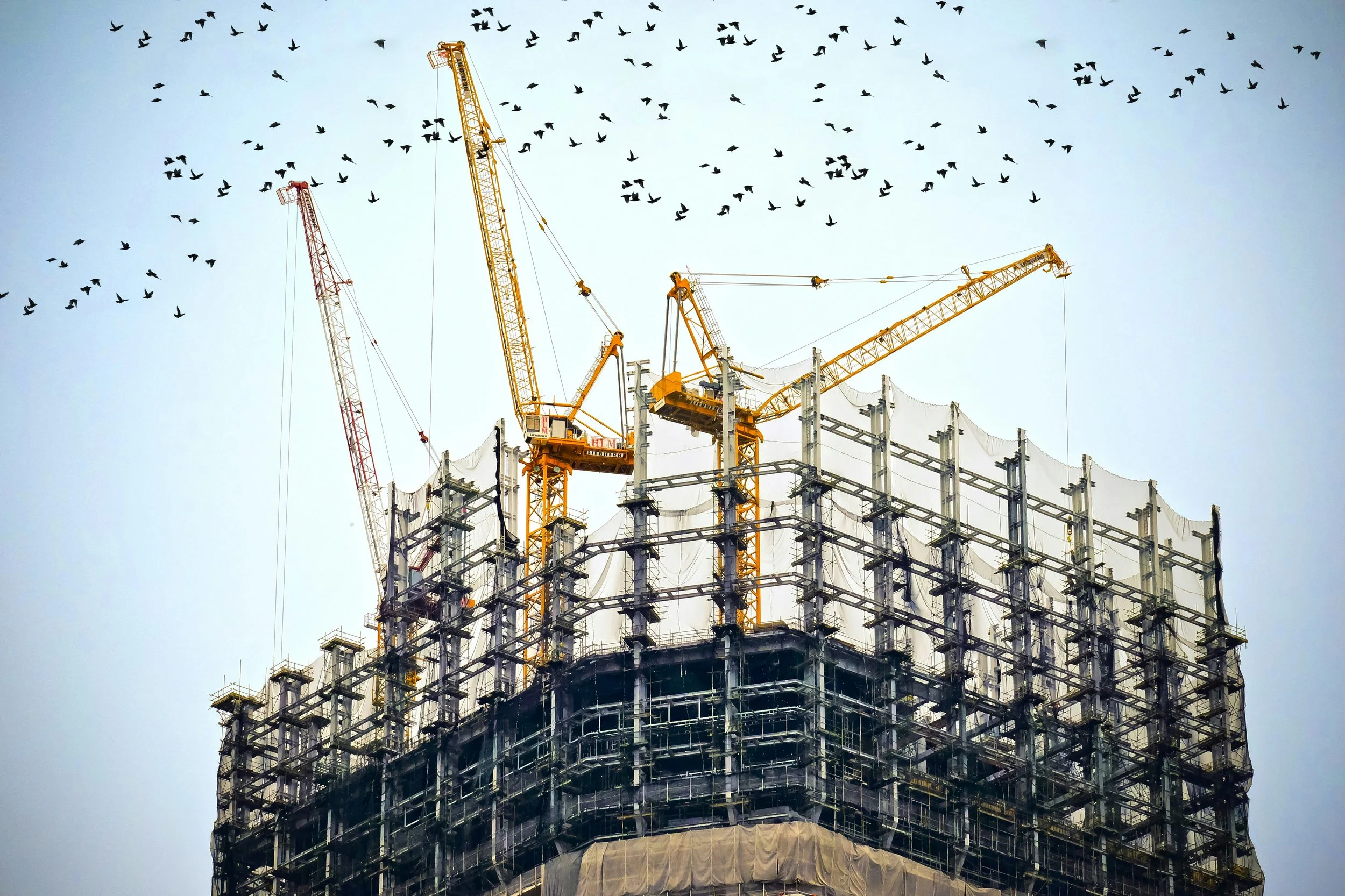
The Handoff Crisis: Understanding What's Really Breaking
Before exploring how digital twins solve the problem, it's worth understanding why traditional construction handoff fails so consistently.
The Data Loss Cascade
Construction projects generate massive amounts of valuable data. Every design decision, material specification, installation detail, test result, and as-built condition creates information that will be critical for operating the building effectively. Yet research shows that by the time commissioning completes, up to 30% of this data has disappeared.
The reasons are systemic. Design teams work in BIM platforms that aren't accessible to operations staff. Construction crews track progress in project management tools that stop being updated once the GC leaves the site. Subcontractors maintain their own records in disparate systems—or on paper—that never get consolidated. Testing and commissioning data lives in spreadsheets that don't connect to the building's actual systems.
When handoff occurs, someone attempts to compile all this fragmented information into a coherent package. The result is inevitably incomplete. Documentation is outdated, reflecting design intent rather than as-built conditions. Equipment data is missing or inaccurate. Maintenance procedures are generic rather than specific to installed systems. The facility management team inherits what one industry veteran called "piles of output" rather than actionable intelligence.
The Square Peg, Round Hole Dilemma
Even when data does successfully transfer, it often arrives in the wrong format. BIM models created for design coordination aren't structured for facility operations. They contain excessive detail irrelevant to maintenance while missing operational data critical for FM teams. CAD drawings show what was designed but not what changed during construction. Equipment specifications list manufacturer data without site-specific installation details.
This mismatch stems from a fundamental disconnect. Design and construction teams optimize for their phase of the project. BIM helps coordinate trades, avoid clashes, and plan sequencing—all valuable during construction, but addressing different needs than operations faces. When these design-centric tools get handed off to facility managers, the reaction is predictable: "This doesn't help us do our jobs."
A facilities manager at a major healthcare organization described the frustration: "We receive these massive BIM models that our team can't even open, let alone use for maintenance planning. Meanwhile, critical information like exactly which filter is installed in which AHU, or the commissioning test results showing baseline performance—that stuff is buried somewhere or completely missing."
The Handoff Time Bomb
Perhaps most damaging is that handoff problems often don't become apparent until months or years later. The facility operates normally until the first major maintenance event...and then the team discovers they don't have the information needed to service equipment efficiently.
When Shawmut Design and Construction's CEO Les Hiscoe analyzed where inefficiencies occur across project lifecycles, he identified handoffs between trades as a critical pain point. Buffer time built into each trade's schedule creates compounding waste—"if you take two out of five days as not entirely necessary, that's 40% waste right there." This same pattern repeats at the construction-to-operations handoff, except instead of buffer days, it's months or years of reactive maintenance compensating for missing operational data.
The costs accumulate quietly but relentlessly: technicians spending hours searching for equipment specifications, emergency service calls because preventive maintenance wasn't scheduled properly, shortened asset life because optimal operating parameters weren't documented, and energy waste because commissioning baselines disappeared.
Digital Twins: The Persistent Knowledge Framework
Digital twins solve handoff challenges by fundamentally changing the relationship between construction and operations. Rather than treating these as separate phases requiring data translation and transfer, digital twins create a continuous information framework that spans the entire building lifecycle.
From Day One to Day Ten Thousand
The power of digital twin-enabled handoff begins before construction even starts. When Corgan Architecture began work on the $1.6 billion LAX construction project, they integrated Matterport's digital twin technology into workflows from the beginning. The goal wasn't just to document construction—it was to create a living asset that would serve the facility through design, construction, commissioning, and decades of operations.
This lifecycle approach means data is captured in its operational context from the start. Equipment isn't just modeled—it's tagged with manufacturer data, installation specifications, commissioning results, and maintenance requirements. Spaces aren't just drawn—they're populated with actual photos showing as-built conditions. Systems aren't just coordinated—they're documented with test results, performance baselines, and operational parameters.
By the time handoff occurs, there's nothing to translate or compile. The digital twin is already the facility's operational intelligence platform. Facility managers don't receive separate documentation packages; they receive ongoing access to the same digital environment that guided construction, now enriched with all the as-built data and commissioning information captured during the build.
Real-Time Reality Capture
One of digital twins' most powerful capabilities is continuous documentation of actual conditions rather than relying on design intent. Corgan's team on the LAX project completed 50 scans of the 18,000 square foot utility tunnel in about an hour during the initial phase. As they optimized their process with Matterport's fast capture capability, scan time decreased by 50%.
This rapid reality capture fundamentally changes how as-built documentation works. Instead of relying on field crews to manually update CAD drawings—a process that's slow, expensive, and prone to errors—digital twins use photogrammetry and laser scanning to capture precisely what exists. When MEP coordination conflicts arise during installation, the team can verify actual conditions rather than arguing over drawings that may or may not reflect reality.
For facility managers, this means the documentation they receive at handoff actually matches the building they're operating. When a technician needs to access a specific valve or verify the routing of a particular pipe run, the digital twin shows exactly where it is and how to reach it. No more discovering that the as-built drawings are actually the design drawings with hasty redline markups.
The Integration Advantage
Digital twins become true operational assets when they integrate with the building's active systems. Rather than static documentation, they become dynamic interfaces showing real-time performance, maintenance status, and operational conditions.
This integration transforms how commissioning and handoff work. In traditional projects, commissioning teams test systems, document results, and hand over binders of data that may or may not get properly integrated into the facility's CMMS. With digital twin platforms, commissioning data flows directly into the operational model. Equipment objects in the 3D environment display test results, performance baselines, and operational specifications.
When a building automation system detects an anomaly, the digital twin provides instant visual context: which equipment is affected, what systems depend on it, where technicians need to go, and what maintenance history exists. When energy consumption exceeds normal patterns, the digital twin highlights which zones are responsible and connects to historical data showing when the pattern changed.
SIM-ON's platform demonstrates this integration principle by connecting digital twins with major building automation providers including KNX, Samsung SmartThings, Fibaro, and Schneider Electric. Facility managers don't just see where IoT devices are located—they control them, monitor their performance, and schedule maintenance directly through the 3D interface. The handoff doesn't transfer documentation; it transfers an intelligent operational platform.
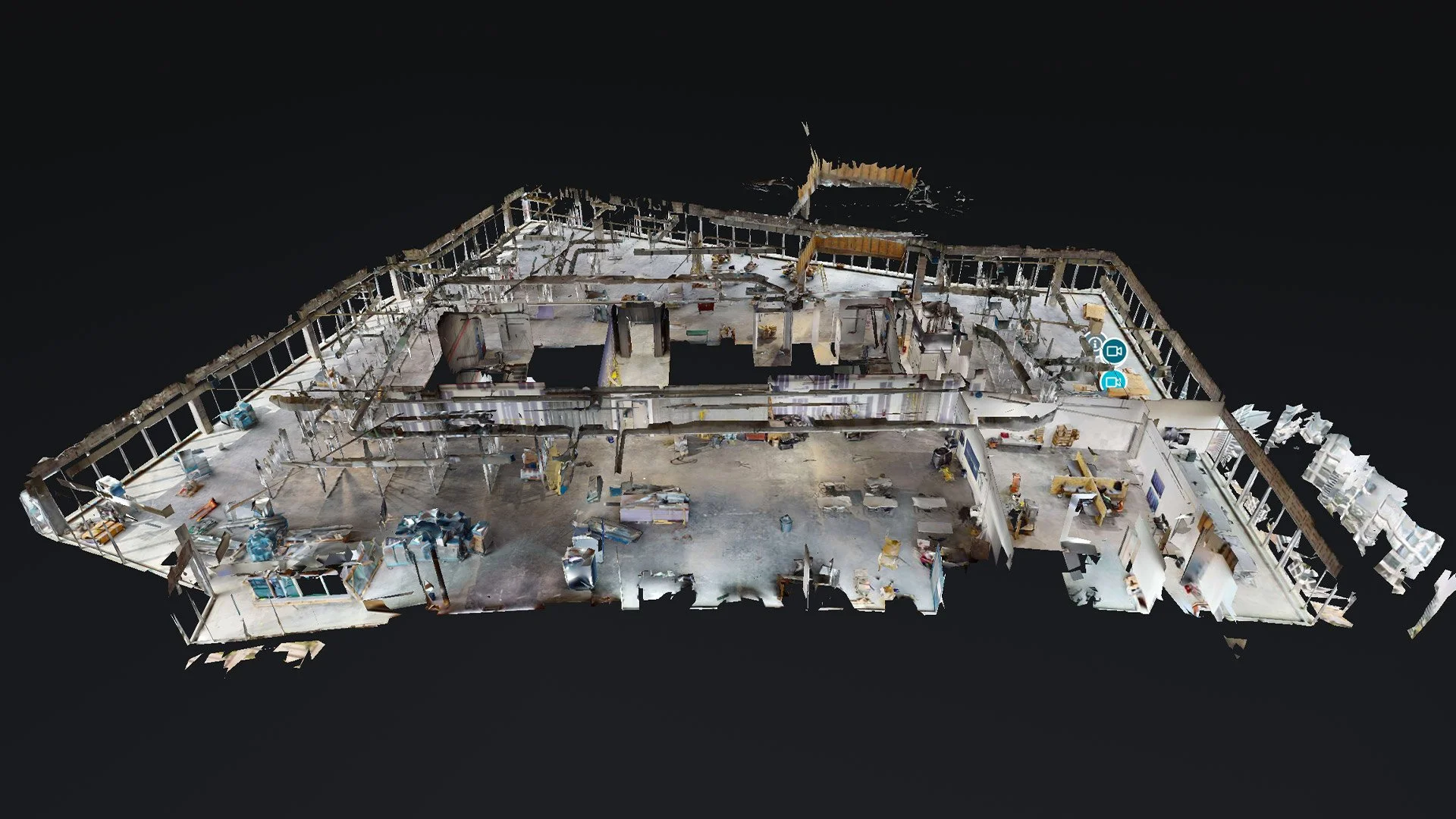
Construction Site via Matterport for AEC Magazine
Real-World Transformation: Digital Handoff in Practice
The theoretical benefits of digital twin-enabled handoff become concrete when examining organizations that have successfully implemented this approach.
LAX Reconstruction: Documentation at Scale
Corgan's LAX project illustrates digital twins' value for complex, multi-phase construction with extensive stakeholder requirements. The project involved numerous owners, contractors, and facility managers, all needing access to project information for different purposes.
By creating comprehensive 3D digital twins at key milestones, Corgan enabled all stakeholders to "walk through" construction progress virtually. Project teams identified issues through virtual punch lists before they became costly rework. Owners reviewed completed work without coordinating site visits. Most critically, facility managers began familiarizing themselves with the building's systems and layout months before handoff—dramatically shortening the typical learning curve.
The documentation challenge that digital twins solved at LAX was capturing existing conditions before renovation work began. Traditional survey methods would have been prohibitively expensive and time-consuming for an active airport terminal. Matterport's digital twin technology enabled rapid, comprehensive documentation that served as the baseline for design and construction—and ultimately became part of the facility's permanent operational record.
O3 Solutions: Commissioning Revolution
O3 Solutions has pioneered using digital twins specifically to streamline the construction-to-operations transition. Their platform addresses what they identify as the core handoff problem: each phase introduces delays, rework, and gaps that compromise asset performance.
Their digital twin approach connects system readiness monitoring across construction, commissioning, and operations in a single environment. Every valve, instrument, and piece of equipment exists as a data-rich object linked to completion requirements, test protocols, and operational specifications. Construction teams update progress in real-time, commissioning teams validate readiness without waiting for manual reports, and operations teams access complete handover packages without compilation delays.
The impact is measurable. Digital twins eliminate the traditional gap between construction completion and commissioning readiness. As construction progresses, updates flow directly into the digital environment. Commissioning can begin immediately when systems reach readiness rather than waiting for paperwork, compressing commissioning duration and reducing startup risk.
Healthcare Facilities: Meeting Complex Operations Needs
Healthcare facility management presents particularly acute handoff challenges. Medical equipment requires precise maintenance schedules. Critical systems demand complete documentation for regulatory compliance. Operations teams need comprehensive understanding of complex MEP systems to maintain patient care environments.
Research from Healthcare Facilities Management emphasizes that successful digital twin handoff requires early collaboration between planning, design, construction, and operations stakeholders. The teams must establish shared understanding of which operational systems—CMMS, BMS, IWMS—will be populated with handoff data. Once these requirements are clear, technology can capture, structure, and deliver the right data in the right format at the right time.
This collaborative approach prevents the common scenario where construction delivers "what they think operations needs" rather than "what operations actually needs." By involving facility management in defining digital twin data structures from the beginning, the handoff becomes seamless. The digital twin is already formatted for the FM team's systems and workflows.
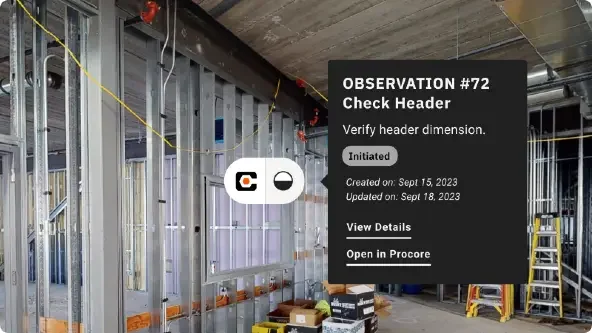
Procore Integration
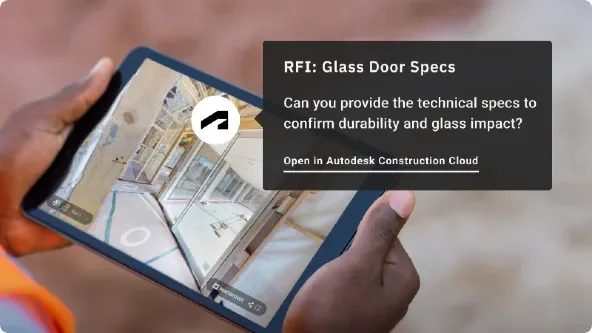
Autodesk Construction Cloud Integration
The Technical Framework: Building Handoff-Ready Digital Twins
Creating digital twins that successfully bridge construction and operations requires thoughtful technical planning. Organizations achieving the best results follow several key principles.
Define Operational Requirements First
The most common digital twin failure mode is building something impressive during construction that proves useless for operations. Avoiding this trap requires defining operational needs before design even begins.
Facility management teams should specify exactly what data they need for each asset type: equipment specifications, installation details, commissioning baselines, maintenance schedules, warranty information, and vendor contacts. They should identify which systems this data needs to integrate with: CMMS platforms, building automation systems, asset management databases, and work order systems.
With these requirements established, the digital twin can be structured from day one to deliver operational value. Asset tagging follows the FM team's taxonomy. Data fields match CMMS requirements. Integration APIs connect to operational systems. The result is a digital twin that doesn't require translation at handoff—it's already speaking the operations team's language.
Capture Data Throughout Construction
Digital twins gain value through continuous data enrichment during construction. This isn't just about periodic scans documenting progress—it's about systematically capturing operational information as construction proceeds.
When equipment gets installed, the digital twin should capture not just location but also: serial numbers, installation date, commissioning test results, baseline performance parameters, maintenance schedules, and warranty details. When systems get tested, results should flow directly into the digital model, creating the performance baseline that facility teams will reference for decades.
This continuous capture requires changing construction workflows. Subcontractors need to understand they're not just building the physical facility—they're also building its digital twin. This means providing data in structured formats, taking photos documenting as-built conditions, and updating the digital model as work progresses.
Organizations implementing this successfully often include digital twin deliverables in subcontract specifications. Payments may be tied not just to physical work completion but also to digital documentation delivery. This ensures the digital twin stays current rather than becoming a last-minute scramble to compile documentation.
Plan Integration Architecture
The digital twin's value multiplies when it integrates with operational systems rather than existing as a standalone platform. This integration requires careful architecture planning.
At minimum, successful implementations establish data flows between the digital twin and: the CMMS (to synchronize asset data and maintenance schedules), the BMS (to display real-time performance and trigger alerts based on spatial context), the asset management system (to track equipment lifecycle and replacement planning), and document management (to link technical specifications and O&M manuals to specific equipment).
More sophisticated integrations extend to energy management systems, space utilization platforms, occupancy sensors, and sustainability tracking tools. The digital twin becomes the visual interface that connects disparate operational systems, providing spatial context that makes data meaningful.
This level of integration doesn't happen accidentally. It requires API development, data mapping, authentication frameworks, and ongoing synchronization protocols. Organizations should plan integration architecture before construction begins, ensuring the digital twin platform selected actually supports the required connections.
Establish Governance and Standards
Digital twins span decades and multiple organizational transitions. Ensuring they remain valuable requires governance frameworks establishing how data gets maintained, updated, and accessed over time.
Successful implementations define: who owns the digital twin (typically the facility owner rather than the contractor), who has permission to modify it (typically restricted to authorized facility staff), what standards govern data entry (taxonomies, naming conventions, required fields), how frequently updates occur (after renovations, equipment replacement, space reconfigurations), and what audit processes ensure data quality.
Without governance, digital twins decay. Equipment gets replaced but the model doesn't update. Renovations change layouts but the digital twin still shows original conditions. New staff don't understand the system so it stops getting used. Governance prevents this entropy, ensuring the digital twin remains an accurate, valuable operational asset.
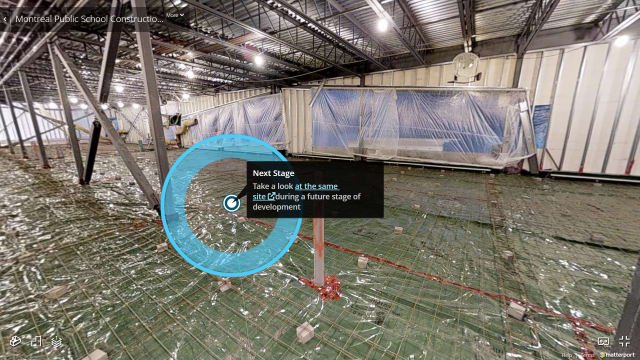
Montreal Public School Construction
Overcoming Implementation Challenges
While digital twin benefits for construction handoff are clear, implementation isn't without challenges. Organizations that successfully navigate these obstacles share common approaches.
The Skills Gap
Traditional construction roles don't naturally include digital twin management. Addressing this requires a combination of training, dedicated personnel, and modified workflows.
Progressive contractors are hiring digital construction coordinators specifically responsible for digital twin management throughout projects. These roles bridge construction and IT, understanding both how buildings get built and how digital systems work. They ensure scans happen on schedule, data flows properly, and the digital twin accurately reflects construction progress.
For facility management teams, successful adoption requires investing in training before handoff occurs. FM staff should begin working with the digital twin during construction, learning the interface and workflows while the construction team is still available for questions. By the time handoff occurs, the FM team is already proficient.
The Cost Question
Digital twin implementation adds cost to construction projects—scanning services, platform subscriptions, additional coordination, and data management. Owners reasonably ask whether the investment delivers sufficient return.
The business case becomes clear when comparing traditional handoff costs against digital twin benefits. Organizations waste billions annually due to incomplete documentation, missing maintenance data, and reactive operations stemming from poor handoff. A comprehensive study found that poor communication and data management costs the construction industry $30-40 billion annually just in labor inefficiencies.
When digital twins eliminate even a fraction of these losses—through faster commissioning, reduced reactive maintenance, optimized energy operations, and extended asset life—ROI becomes compelling. Organizations typically see payback within 12-24 months through operational savings alone, with compounding benefits over the building's life.
Change Management
Perhaps the most significant challenge isn't technical—it's cultural. Construction teams must change how they work. Facility managers must adopt new tools and workflows. Owners must invest in unfamiliar technology.
Successful implementations treat digital twin adoption as a change management initiative, not just a technology deployment. This means: securing executive sponsorship that reinforces the importance of proper handoff, establishing clear communication about benefits for each stakeholder group, creating champions within construction and operations teams who drive adoption, providing comprehensive training with ongoing support, and celebrating early wins that demonstrate value.
Organizations that approach implementation this way see much higher adoption rates and better outcomes than those that simply purchase software and expect teams to figure it out.
The Future: Autonomous Buildings Start at Handoff
The digital twin capabilities available today represent just the beginning of what's possible. The next generation of construction-to-operations handoff will incorporate increasingly sophisticated intelligence.
AI-Driven Validation
Current digital twin systems rely on humans to ensure data completeness and accuracy. Future systems will use AI to automatically validate that handoff documentation is complete, accurate, and usable.
Machine learning models will analyze digital twins against completion checklists, flagging missing commissioning data, identifying equipment without proper documentation, and verifying that as-built conditions match design intent where appropriate. Rather than facility managers discovering gaps months after handoff, AI validation ensures completeness before the contractor leaves.
Generative AI will transform how operations teams interact with handoff data. Instead of searching through manuals, facility managers will ask natural language questions: "Show me all AHUs installed in the past five years" or "What was the commissioning baseline for the West Wing HVAC system?" The digital twin will provide answers by interpreting operational data in spatial context.
Predictive Handoff Intelligence
Digital twins will evolve from documentation tools to predictive platforms that actively support operations planning. By analyzing commissioning data, equipment specifications, and usage patterns, AI systems will generate proactive maintenance recommendations before facility teams even ask.
These systems will identify equipment likely to require attention in the first year based on commissioning results and manufacturer data. They'll suggest optimal preventive maintenance schedules considering both equipment requirements and operational constraints. They'll flag potential issues—like systems installed near performance limits or equipment configurations that may complicate future maintenance.
This predictive intelligence transforms handoff from documentation transfer to operational preparation. Facility teams don't just receive information about the building—they receive actionable intelligence about how to operate it optimally from day one.
Continuous Digital Threads
The ultimate evolution is eliminating handoff as a distinct event altogether. Instead of data transfer at project completion, digital twins create continuous information threads spanning design, construction, commissioning, operations, renovations, and eventual decommissioning.
The same intelligent model that guided design informs construction, documents commissioning, enables operations, and supports future renovations. When systems need replacement twenty years later, the digital twin contains complete historical context: original specifications, performance over time, maintenance history, and failure patterns. Design teams planning renovations work within the same digital environment that facility managers use daily.
This continuous thread creates compounding value. Each phase enriches the digital twin with additional data. Operations generates performance insights that inform future design decisions. Maintenance patterns reveal which equipment performs reliably and which creates problems. The building's digital representation becomes increasingly intelligent over its entire lifecycle.
Making It Real: Getting Started with Digital Handoff
For organizations ready to transform their construction-to-operations handoff through digital twins, the path forward involves several critical steps.
Start with a Pilot
Rather than attempting portfolio-wide implementation immediately, begin with a single project that demonstrates value. Select a building with: moderate complexity (substantial but not overwhelming), engaged stakeholders willing to try new approaches, clear operational requirements that can guide digital twin structure, and sufficient timeline to implement properly without rushing.
Use this pilot to develop workflows, train staff, refine data requirements, and measure ROI. Document what works and what doesn't. Build internal expertise and champions who can support broader rollout. Most importantly, demonstrate concrete value that builds organizational confidence in the approach.
Define Success Metrics
Establish clear, measurable objectives for what digital twin-enabled handoff should achieve. These might include: reduction in commissioning duration (target: 15-30% faster), decrease in year-one reactive maintenance calls (target: 20-40% reduction), time saved on equipment documentation searches (target: 60-80% reduction), improved energy performance against commissioning baseline (target: 5-15% better), and facility manager satisfaction with handoff documentation quality.
These metrics provide both accountability and evidence. When the pilot succeeds, quantified results make the business case for broader adoption compelling. When challenges arise, metrics help identify where improvements are needed.
Partner with Expertise
Digital twin implementation requires capabilities many construction and facility teams don't possess internally. Organizations achieving best results often partner with specialized providers who bring both technology platforms and implementation expertise.
Look for partners who: understand both construction and facility operations, offer platform-agnostic solutions that integrate with your existing systems, provide comprehensive support including training and change management, demonstrate proven results with case studies and references, and commit to long-term relationships beyond just technology sales.
The right partner functions as an extension of your team, bringing knowledge and capabilities that accelerate implementation while building internal competency.
Plan for Scale
Even while piloting, keep scalability in mind. Ensure the platform selected can handle multiple buildings and sites. Establish data standards that will work across your portfolio. Develop training materials that can be replicated. Build governance frameworks that support long-term sustainability.
When the pilot succeeds, you want to be ready to expand rapidly rather than having to rethink everything for broader deployment.
The Bottom Line: Handoff Is Where Value Lives or Dies
Construction projects can be perfectly designed, flawlessly built, and on-time and on-budget...and still fail if handoff doesn't work. When facility teams can't operate and maintain buildings effectively because critical information disappeared during transition, all the upstream success becomes meaningless.
Digital twins solve this problem by fundamentally changing the handoff paradigm. Rather than transferring documentation, they create persistent knowledge frameworks that span the entire building lifecycle. The intelligent 3D model that guided construction becomes the operational platform that empowers facility management.
The results are compelling: faster commissioning, more effective maintenance, optimized energy performance, extended asset life, and facility teams empowered with complete building intelligence. Organizations lose 30% of construction data during traditional handoff. Digital twins preserve 100% and make it instantly accessible when needed.
The construction industry wastes tens of billions annually on inefficiencies stemming from poor handoff. The technology exists. The business case is proven. The question isn't whether digital twin-enabled handoff is the future—it's whether your organization will be among the leaders reaping the benefits today, or playing catch-up tomorrow while competitors gain operational advantages.
The gap between construction and operations has cost the industry too much, for too long. Digital twins finally bridge that gap. It's time to make the crossing.
Ready to Transform Your Handoff Process?
Start by assessing handoff challenges in your current projects, defining operational requirements before your next build begins, and partnering with digital twin experts who can guide implementation. The buildings you construct today will be operated for decades—ensure facility teams have the intelligence they need to operate them exceptionally.
