

Why Digital Twins will Surge in 2026
Why Digital Twins will Surge in 2026
30% annual market growth, documented ROI, and a shrinking window to act
Digital twins have been talked about for years. But talking and doing are very different things.
In 2026, the gap between the two is closing fast. The technology has matured. The data infrastructure is in place. And the ROI is now documented, measurable, and impossible to ignore. Organisations that are still sitting on the fence are no longer just missing out on a trend. They are actively falling behind competitors who have already made the move.
Here is why this year is different, and why digital twins are set to surge.
The Market Numbers Are Hard to Argue With
The global digital twin market is currently estimated at around $36 billion, growing at a compound annual growth rate of over 30%. Projections suggest the market could reach hundreds of billions by 2035. That is not speculative hype. It is the result of years of investment in digitisation, IoT infrastructure, and AI capability finally converging into deployable, scalable technology.
North America leads adoption, but the fastest growth is happening across Asia-Pacific, driven by smart manufacturing programmes and government-backed digitisation initiatives. Manufacturing, oil and gas, automotive, healthcare, and the built environment are all seeing rapid uptake, precisely because the ROI in those sectors is the most tangible.
This is no longer early adopter territory. It is mainstream.
The Technology Has Finally Caught Up to the Hype
For a long time, digital twins were aspirational. The concept was compelling, but the supporting infrastructure was not mature enough to deliver at scale. That has changed.
Since 2020, companies have invested heavily in digitisation. IoT sensors are now generating the kind of continuous, reliable data that digital twins depend on. Edge computing is reducing latency to near-instantaneous levels. AI and machine learning have become capable enough to act on that data in real time, not just report on it.
The shift from IT and operational technology (OT) convergence has been particularly significant. Data that used to sit in separate silos—engineering models, sensor feeds, enterprise systems—can now be connected into a unified operational layer. That layer is the digital twin.
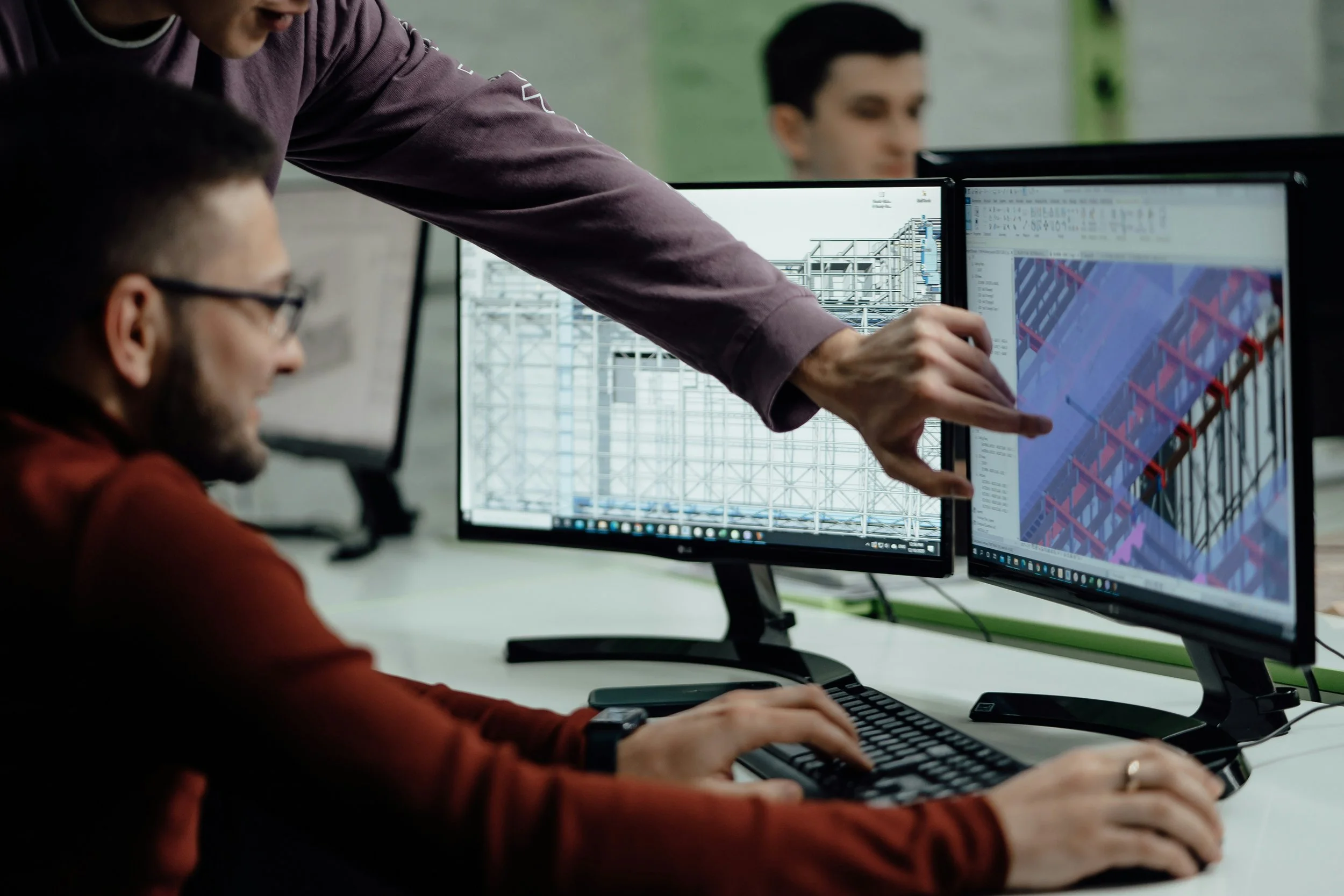
The ROI Is Real, Documented, and Significant
Sceptics used to ask for proof. Now there is plenty of it.
- Training time cut by 50%
- Onboarding incidents reduced by 80%
- Cost per operator lowered by 60%
- Procedure retention improved by 90%
- Data synchronisation improved by 85%
- Data-related reworks dropped by 70%
- BoM data entry time compressed from 4 hours to under 15 minutes per update
- Review time reduced by 50%
- Manual errors cut by 80%
- Cross-team coordination improved by 90%
These are the kinds of numbers that change how CFOs think about capital allocation.
Predictive Maintenance: From Reactive to Prescriptive
One of the most powerful use cases for digital twins is predictive maintenance, and it is delivering results across sectors from energy to healthcare to the built environment.
The principle is straightforward. By combining real-time sensor data with a virtual model of an asset, you can predict when something is going to fail before it does. You can also identify where the bottlenecks are, understand whether a system is operating at its optimal point, and intervene accordingly.
AI models embedded in digital twins can proactively detect degradation patterns before they affect operations, with the potential to cut unplanned downtime by up to 50%.
For FM directors and estates teams managing large, complex portfolios, this is transformative. Maintenance budgets are constrained. Reactive repairs are expensive. Unplanned downtime in a healthcare facility or a major commercial asset carries real financial and reputational risk. A digital twin that can flag a failing component weeks in advance, and automatically generate a work order, pays for itself very quickly.
Safer Training. Fewer Incidents. Better Outcomes.
One underappreciated use case for digital twins is workforce training, and the results in industrial settings point to a clear opportunity across sectors.
During the COVID-19 pandemic, MxD used digital twin technology to safely model the process of connecting two patients to a single ventilator, a scenario too dangerous to practise on real equipment. The project demonstrated how digital twins could be used to monitor system status and provide real-time insights in safety-critical situations.
The same logic applies to any environment where getting it wrong carries serious consequences. Chemical plants, energy infrastructure, complex building systems, large-scale construction projects. A digital twin lets your team train on the real environment, in realistic scenarios including emergencies, without any of the real-world risk.
When the training results from an Air Separation Unit simulation show an 80% reduction in onboarding incidents, it is worth asking what the equivalent improvement would look like in your organisation.
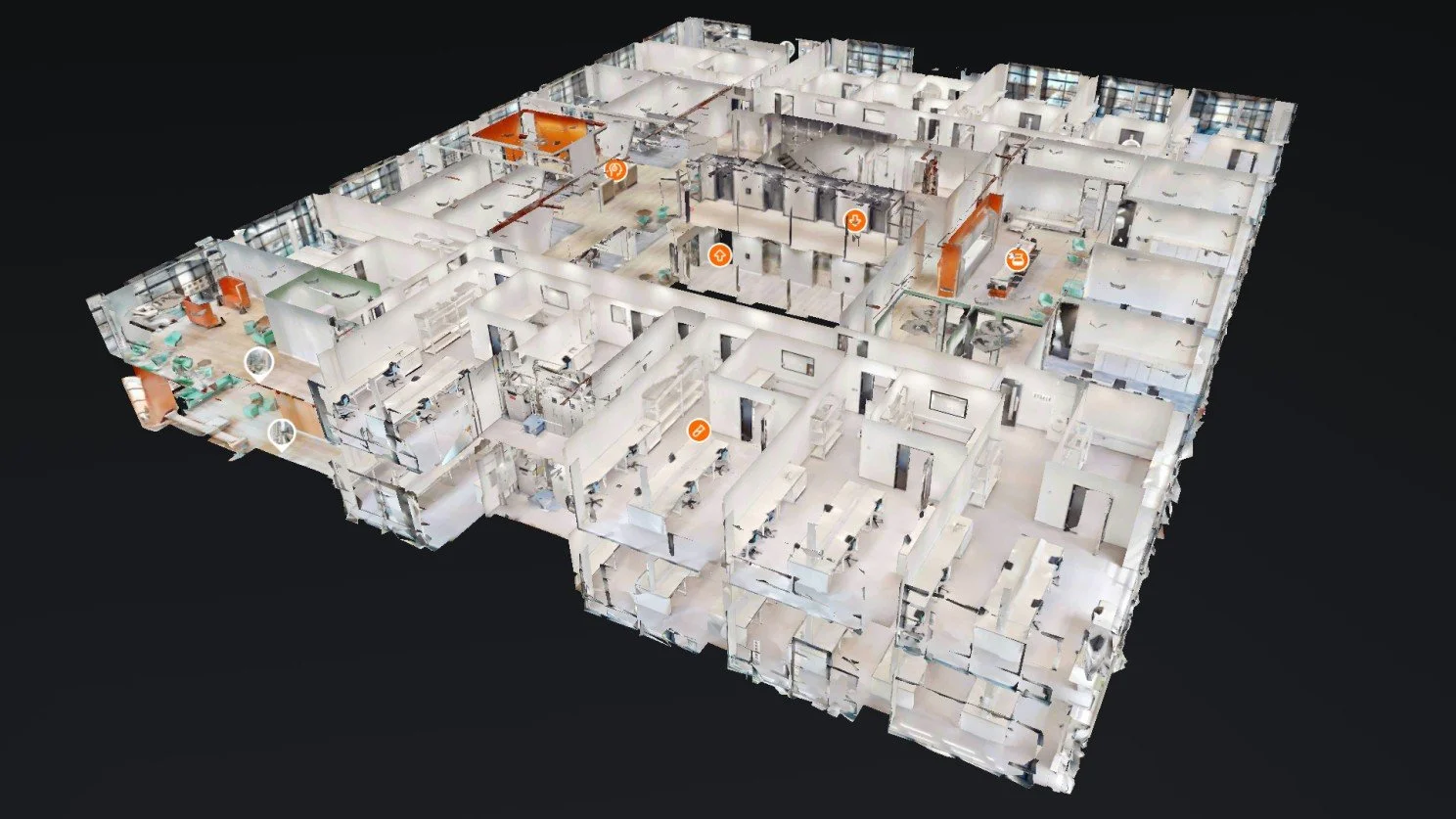
Dollhouse showing both floors of a life sciences building
Sustainability Is No Longer Optional
ESG pressure is not going away. Net zero commitments, energy efficiency regulations, and investor scrutiny of environmental performance are all intensifying. Digital twins are becoming a core tool for organisations that need to demonstrate real progress rather than intent.
By simulating energy flows, occupancy patterns, and system performance, a digital twin enables building operators to make targeted interventions. Not blanket changes based on averages, but precise, data-backed decisions based on what is actually happening in the building right now.
By fully modelling a facility's energy use and resource flows, digital twins help organisations monitor emissions and optimise processes to meet sustainability goals and regulatory requirements.
For organisations chasing SmartScore accreditation, BREEAM In-Use targets, or net zero pathways, having a live operational layer connected to your building's systems is not a luxury. It is the foundation everything else is built on.
AI Makes It Smarter. But Data Makes It Work.
There is a lot of noise in the market right now about AI-powered digital twins. The narrative is compelling, but Neil Hancock, Director at Twinview, offered a grounding perspective in early 2026:
This is the most important practical insight for any organisation planning a digital twin initiative. AI does not conjure value from fragmented, inconsistent, or unreliable data. Before chasing intelligent automation, the priority has to be getting the data foundation right: centralising asset information, integrating live building systems, and establishing a single, trusted operational view.
Once that foundation is in place, AI becomes genuinely powerful. Predictive AI identifies patterns that precede failures. Generative AI creates plausible future states and helps planners evaluate tradeoffs. Multi-agent systems enable autonomous digital twins to interact with physical assets and make decentralised decisions with minimal human intervention.
The sequence matters. Foundation first. Intelligence second.
The Built Environment Is One of the Biggest Opportunities
While much of the public conversation around digital twins centres on manufacturing and industrial operations, the built environment represents one of the largest and fastest-growing opportunity areas.
Sectors with the strongest operational adoption in 2026 include higher education, healthcare, social housing, and large commercial real estate portfolios, where buildings are either mission-critical or operationally complex.
What separates the leaders from the followers in these sectors is not the sophistication of their 3D model. It is whether the digital twin is connected to real workflows: work orders, compliance tasks, energy monitoring, and daily operational decisions.
A digital twin that only visualises is a missed opportunity. A digital twin that becomes the operational layer your estates team genuinely relies on is a competitive advantage.

2026: The Window Is Open. Not Forever.
The organisations seeing the strongest results from digital twins share a common approach. They started with operational problems, not technology demos. They built their twins on the data and engineering models they already had. And they connected that foundation to the systems and workflows their teams use every day.
The technology is ready. The proof points are there. The market is moving at pace.
The question is not whether digital twins will become standard practice across the built environment, industrial operations, and infrastructure management. The question is whether your organisation will be among the leaders who shaped that shift, or among those who scrambled to catch up once the window had closed.
Ready to Get Ahead?
Start with an assessment of where digital twins create the highest operational value in your organisation. Then build from there, using the approach that leaders are already using: data foundation first, technology second, operational integration always.
