

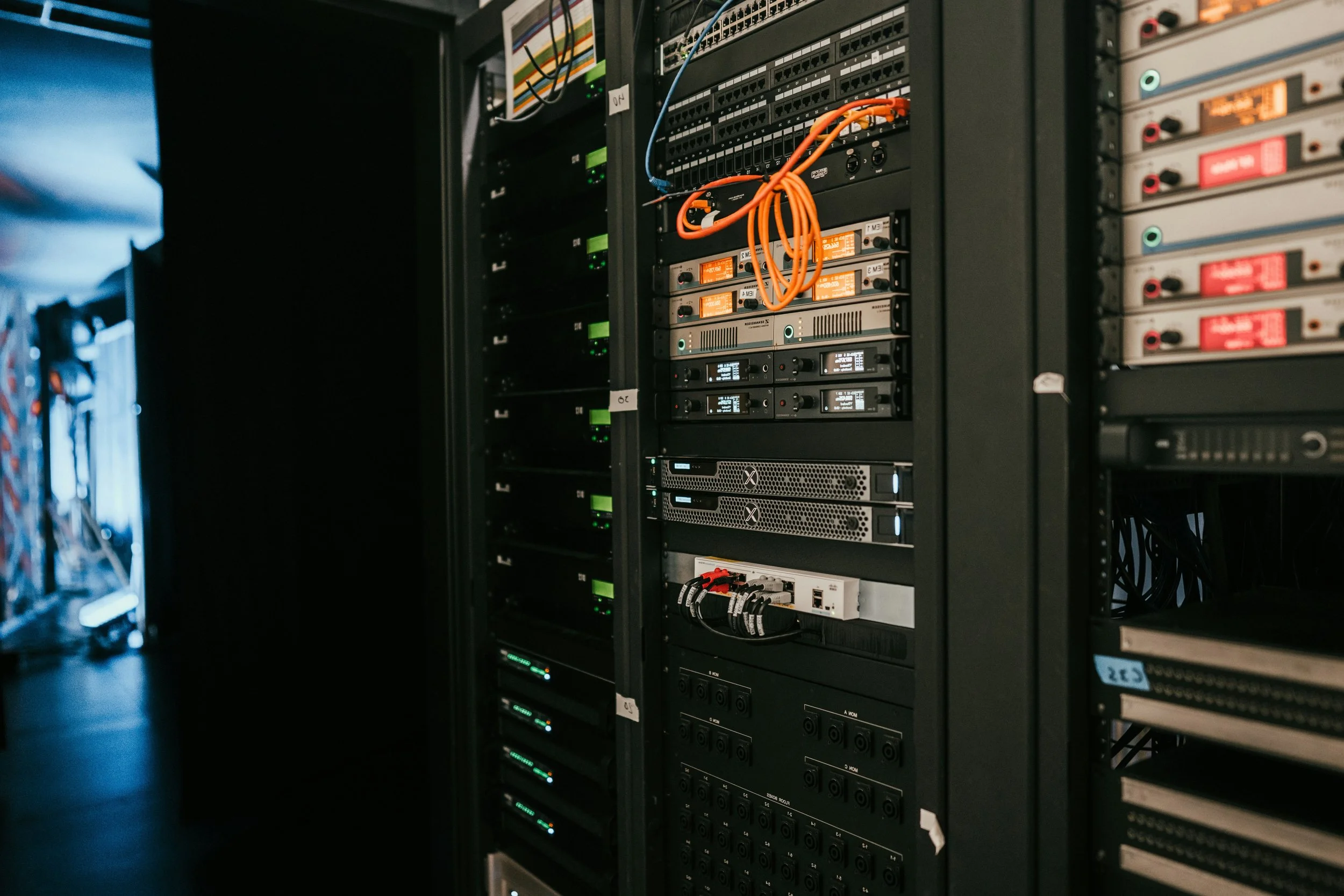
Every cabinet. Every cable. Every kilowatt. Total spatial awareness across the white space.
Twinflow deploys high-fidelity spatial digital twin technology across the complete data centre lifecycle, from base-build commissioning to live IoT-integrated operations. A photorealistic, millimetre-accurate, navigable 3D record of every rack, riser, PDU, CRAC, and cable tray. Centralised. Live. Layered with the asset, sensor, and DCIM data your operations team already runs on.
Critical infrastructure managed with spreadsheets and outdated drawings.
The Five 9s standard is no longer aspirational. It is the contractual floor. Yet most operations teams still navigate their estate through cabinet spreadsheets, photographs in shared drives, and DCIM diagrams that drift out of step with reality within weeks of every change ticket. The result is missed capacity, slow MAC work, costly truck rolls, and avoidable outages.
A live, navigable 3D record of your facility, layered with the data your teams already use.
Every cabinet, every U position, every PDU, every CRAC unit, every cable tray, every riser, every plant room. Captured with professional-grade LiDAR and photogrammetry, accurate to within millimetres, and live in the cloud within 24 to 48 hours. Integrated with your DCIM, BMS, and IoT sensor estate so the model becomes a true operational digital twin, not a static documentation layer. Navigable by your facility managers, DCIM teams, tenants, and auditors from any device, anywhere.
Engineered for the operational reality of mission-critical facilities.
Cabinet-level spatial record of every rack, U position, and patch panel inside the live model.
Visualise available white and gray space, model expansion scenarios, and stress-test deployments.
Connect live power, environmental, and asset data into the navigable spatial environment.
Brief remote engineers and contractors with exact in-rack and in-room context before truck rolls.
Track every server, PDU, and switch through its full service life with spatial provenance.
Visualise power paths, redundancy, and single points of failure across the electrical topology.
Provide auditors with a navigable evidence environment for ISO, SOC 2, PCI, and tier certification.
Drone-captured 3D of cooling plant, generator yards, perimeter security, and roof assets.
01 White space documentation & rack-level capture
Most data centre estates carry a rack inventory that is out of date the day after it is published. New deployments, decommissions, and break-fix work happen continuously, and tracking every cabinet through a spreadsheet creates blind spots that surface during the worst possible moments. Auditors arrive. A tenant asks where their equipment sits. An incident demands an immediate visual of a row that no one has photographed in eighteen months.
A Twinflow capture gives operations a complete 3D record of every cabinet, every U position, every patch panel, and every blanking panel across the white space. Asset orientation, port density, and physical condition are all visible without entering the hall. Sensitive areas can be captured under controlled access, with blurring and access permissions applied per zone.
In practice
- Capture every cabinet, rack, and U position into a permanent visual record
- Tag asset locations, serial numbers, and ownership directly inside the 3D environment
- Document patch panels, cross-connects, and structured cabling at port level
- Restrict view access by tenant, zone, or role for multi-customer colocation environments
02 Capacity planning & space utilisation
White space is the most expensive square footage in your building. Gray space is the most operationally sensitive. Yet most operators still plan deployments through 2D rack elevation diagrams that show what is intended, not what is actually installed. Cable congestion, weight loading constraints, and cooling boundary effects only become visible when a deployment lands and fails to fit.
Twinflow puts your true installed condition into a navigable 3D environment, with floor maps, rack elevations, and cooling zones visible at a glance. Capacity planners can model new deployments against the actual building, not a stale CAD layer. What-if scenarios for expansions, hardware refresh, and AI rack densification become spatial exercises grounded in millimetre-accurate reality.
In practice
- Visualise white space and gray space utilisation across the live floor map
- Model new server deployments and rack densification against the actual installed condition
- Identify cooling boundary risks, weight loading constraints, and access route conflicts pre-deployment
- Plan high-density AI and HPC zones against real overhead clearance and containment geometry
03 DCIM & BMS integration
A digital twin without operational data is documentation. A digital twin connected to your DCIM, BMS, and IoT estate is the operational nerve centre of the building. Twinflow models integrate with the platforms your teams already run, including leading DCIM systems, building management systems, and IoT standards such as KNX, BACnet, Modbus, and SNMP.
Live power data, environmental sensor readings, and equipment health surface inside the spatial model itself. Hot spot formation becomes visible across the room, not buried in a dashboard chart. Power load and PUE trends are seen against the physical infrastructure causing them. The model becomes a live operational interface rather than a quarterly report.
In practice
- Surface live rack PDU, branch circuit, and UPS data spatially across the floor
- Visualise environmental sensor readings, hot spots, and humidity zones in real time
- Anchor BMS data for CRAC, CRAH, and chiller plant directly inside the model
- Integrate with leading DCIM platforms and CMMS systems such as IBM Maximo and equivalent EAM tools
04 Remote operations & smart hands briefing
Every truck roll costs time and money. Every smart hands ticket carries the risk of the wrong cabinet, the wrong port, or the wrong patch lead. Most remote operations rely on cabinet photographs, vague directions, and phone calls that interrupt the team holding the actual context.
Twinflow gives remote engineers, NOC teams, and smart hands contractors precise spatial context before they ever touch the floor. A ticket can reference an exact cabinet, exact U position, and exact port inside the navigable model. New starters reach competence faster. Contractors arrive briefed. Issues get diagnosed and resolved before anyone gets in a vehicle.
In practice
- Brief smart hands and contractors with exact in-rack and in-room spatial context per ticket
- Onboard new operations and NOC staff with virtual walkthroughs before physical access
- Resolve a high percentage of capacity and asset queries without dispatching to site
- Coordinate vendor visits with pre-shared spatial briefings to compress on-site time
05 Asset management & lifecycle tracking
Every server, switch, PDU, and CRAC unit has a service history. Most of that history lives in disconnected systems: warranty logs in one tool, maintenance records in another, replacement orders in procurement, and photographs in nobody's archive. The asset is real. The record is not.
Twinflow anchors every asset to its exact spatial coordinate, linking warranties, maintenance records, photographs, and inspection history to the physical thing itself. AI-assisted capture identifies and logs assets directly from the scan, reducing manual data entry. Decommissioning, refresh cycles, and audit prep all run against a single source of truth that survives staff changes and vendor changes.
In practice
- Anchor every asset to its spatial location with warranty, service, and inspection history
- AI-assisted asset capture and observation logging direct from the scan
- Track equipment through deployment, refresh, and decommissioning lifecycles
- Maintain audit-ready evidence packages without manual report compilation
06 Disaster recovery & resilience planning
Power-related failures cause the majority of impactful data centre outages. Most resilience documentation lives in PDFs and single-line diagrams that describe the design intent rather than the installed condition. When a fault occurs, the team responding has minutes to understand what is actually connected to what, and which redundant path will hold the load.
Twinflow gives resilience teams a navigable record of the full electrical and mechanical topology as installed. Power paths, generator locations, transfer switches, UPS rooms, and fuel storage are visible spatially. Tabletop DR exercises run against the actual building. Insurer assessments, IST results, and load bank test records can be anchored back to the assets they relate to.
In practice
- Visualise full power topology including utility intake, switchgear, UPS, and generator locations
- Identify single points of failure across electrical and mechanical redundancy paths
- Run DR and incident tabletop exercises against the navigable spatial model
- Anchor IST, load bank, and resilience test evidence to the physical infrastructure
07 Compliance, audit & tenant assurance
Data centres operate under one of the densest compliance overlays of any building type. ISO 27001, SOC 2, PCI DSS, Uptime Institute tier certification, TIA-942, and an ever-tightening set of energy efficiency obligations including the EU Energy Efficiency Directive reporting. Most audits still rely on physical walkthroughs, paper evidence, and disruption to live operations.
Twinflow hosts a controlled-access spatial environment that auditors, insurers, and tenants can navigate without entering the building. Evidence of compliance, including environmental controls, physical security measures, and asset condition, lives inside the model with timestamped capture history. Tenant tours and pre-sales walkthroughs become remote-first, with full audit trails of who viewed what and when.
In practice
- Host a controlled-access spatial environment for auditors, insurers, and tenants
- Demonstrate physical security, environmental control, and asset condition with timestamped evidence
- Support ISO 27001, SOC 2, PCI DSS, and Uptime Institute audit cycles with spatial evidence packages
- Enable remote tenant tours and pre-sales walkthroughs without disrupting live operations
08 External envelope, drone surveying & perimeter
The white space is half the operation. The other half is generators, cooling plant, fuel storage, transformer compounds, perimeter security, and the roof. Visual inspection of these assets typically requires scaffolding, MEWPs, or rope access, and most facilities defer inspection until they have to.
Through our drone surveying capability, Twinflow captures full external envelopes, rooftop plant, and perimeter assets using high-resolution photogrammetry and AI-assisted thermal imaging. Cooling tower condition, generator yard layout, transformer compound clearances, and perimeter fencing defects are all documented and time-stamped without disrupting site security or live operations.
In practice
- Capture full external envelope, rooftop plant, and yard assets through drone photogrammetry
- AI-assisted thermal capture for cooling tower performance and roof defect identification
- Document perimeter security infrastructure, fencing, and access control assets
- Maintain a timestamped external condition record across multi-site portfolios
A five-stage delivery model built around mission-critical environments.
Every data centre operates under different constraints: tenant mix, security posture, change window availability, and operational criticality. Our delivery is built to work inside those constraints, not around them.
We review your facility tier, tenant mix, security posture, and operational priorities. Capture scope is defined per hall, per zone, and per access classification, with NDAs and security clearances arranged in advance for our capture technicians and any subcontracted resources.
Our surveyors deploy professional-grade LiDAR and photogrammetry across white space, gray space, plant rooms, and risers. Capture is scheduled around live operations, change windows, and tenant requirements, with controlled access protocols followed at every stage.
For external assets including cooling plant, generator yards, perimeter, and roof, our drone surveying partner captures the full envelope using high-resolution photogrammetry and AI-assisted thermal imaging. All flights are coordinated with site security and local airspace requirements.
Scan data is compiled, calibrated, and published to our secure hosting environment within 24 to 48 hours. Integrations are configured against your DCIM, BMS, and IoT estate. Role-based access is configured per tenant, per zone, and per audit requirement, with full audit logging maintained for compliance purposes.
Subsequent change windows, refresh cycles, and audit events are captured back into the model through scheduled re-surveys and AI-assisted asset and observation logging. The twin becomes a living operational record rather than a static deliverable, kept in step with the live facility.
The business case for digital twins in mission-critical facilities.
In a sector where a single minute of downtime carries six-figure cost exposure and where every cabinet of usable white space carries multi-million-pound revenue potential, Twinflow represents a marginal investment against the operational, audit, and capacity risks that define the economics of every mission-critical facility.

Engineered for every operating model in the industry.
Multi-megawatt campus documentation, base-build commissioning records, and AI hall densification planning.
Tenant zone management, multi-customer access control, audit support, and pre-sales tour environments.
In-house data hall documentation, refresh planning, and migration support for on-premises estates.
High-density rack capture, liquid cooling infrastructure documentation, and power topology visualisation.
Distributed micro-facility documentation across telecoms, retail, and infrastructure footprints.
Controlled-access documentation for classified and security-sensitive facilities with full audit trails.
Compliance-grade documentation for trading floor adjacencies, PCI DSS, and resilience evidence.
MMR, MDF, and meet-me room documentation, cross-connect tracking, and structured cabling records.
Pre-deployment baseline capture, transportation handover records, and post-installation as-built twin.
Live operational records, multi-site portfolio visibility, and capacity planning.
Day-to-day operations, maintenance planning, and contractor coordination.
Integration with DCIM, BMS, and IoT estates for spatial operational intelligence.
Power and cooling topology, resilience planning, and incident investigation.
Base-build documentation, commissioning records, and handover-grade as-built twins.
ISO 27001, SOC 2, PCI DSS, Uptime Institute, and TIA-942 evidence environments.
PUE trending, hot spot identification, and energy efficiency reporting against spatial data.
Self-service zone visibility, asset assurance, and pre-sales walkthrough environments.
Pre-loss documentation, risk profiling, and post-incident investigation support.
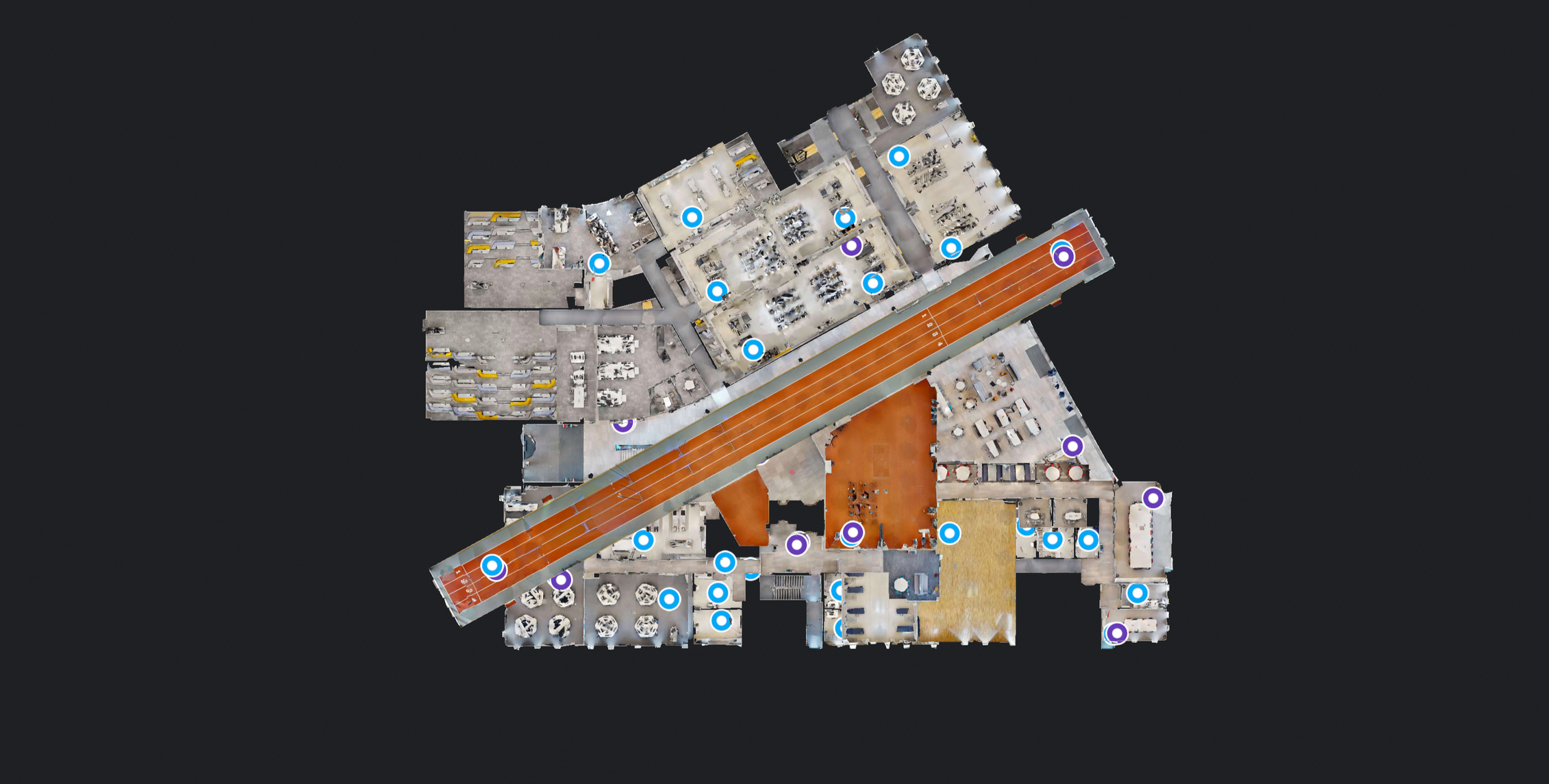
Mission-critical operations deserve mission-critical documentation.
Stop running your white space from spreadsheets and stale CAD diagrams. Twinflow provides the high-fidelity spatial data and integrated operational environment your teams need to maintain uptime, plan capacity, support audit, and protect tenant relationships.