

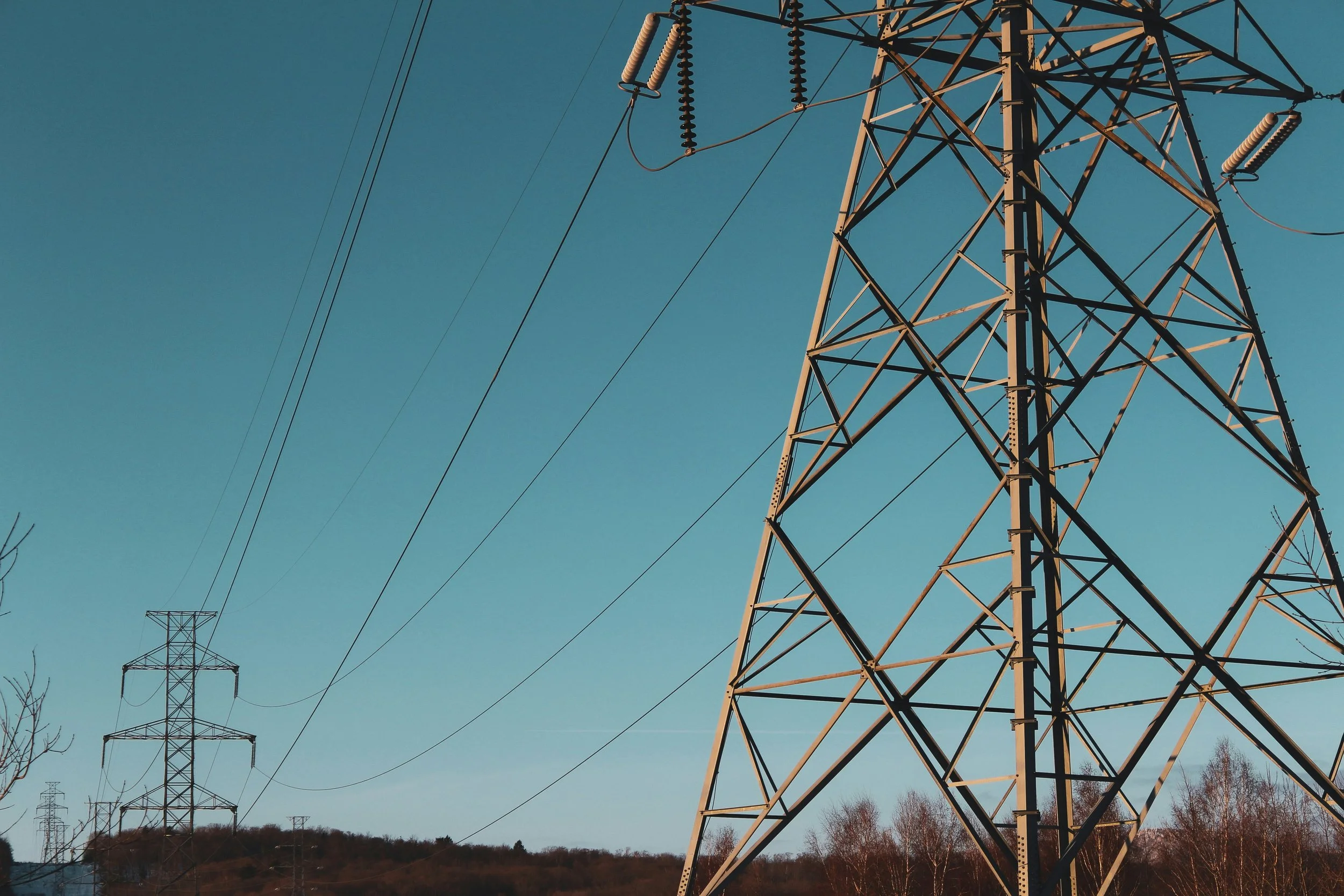
Critical infrastructure runs on accurate information. Most of it is decades out of date.
Twinflow deploys spatial digital twin technology across utilities and energy estates. Photorealistic, dimensionally accurate, always current. One platform. Every location.
A documentation crisis decades in the making.
The energy and utilities sector is operating critical infrastructure on engineering records that no longer reflect the field, and a workforce that is retiring faster than it can be replaced.
A photorealistic, navigable 3D record of your project at every milestone.
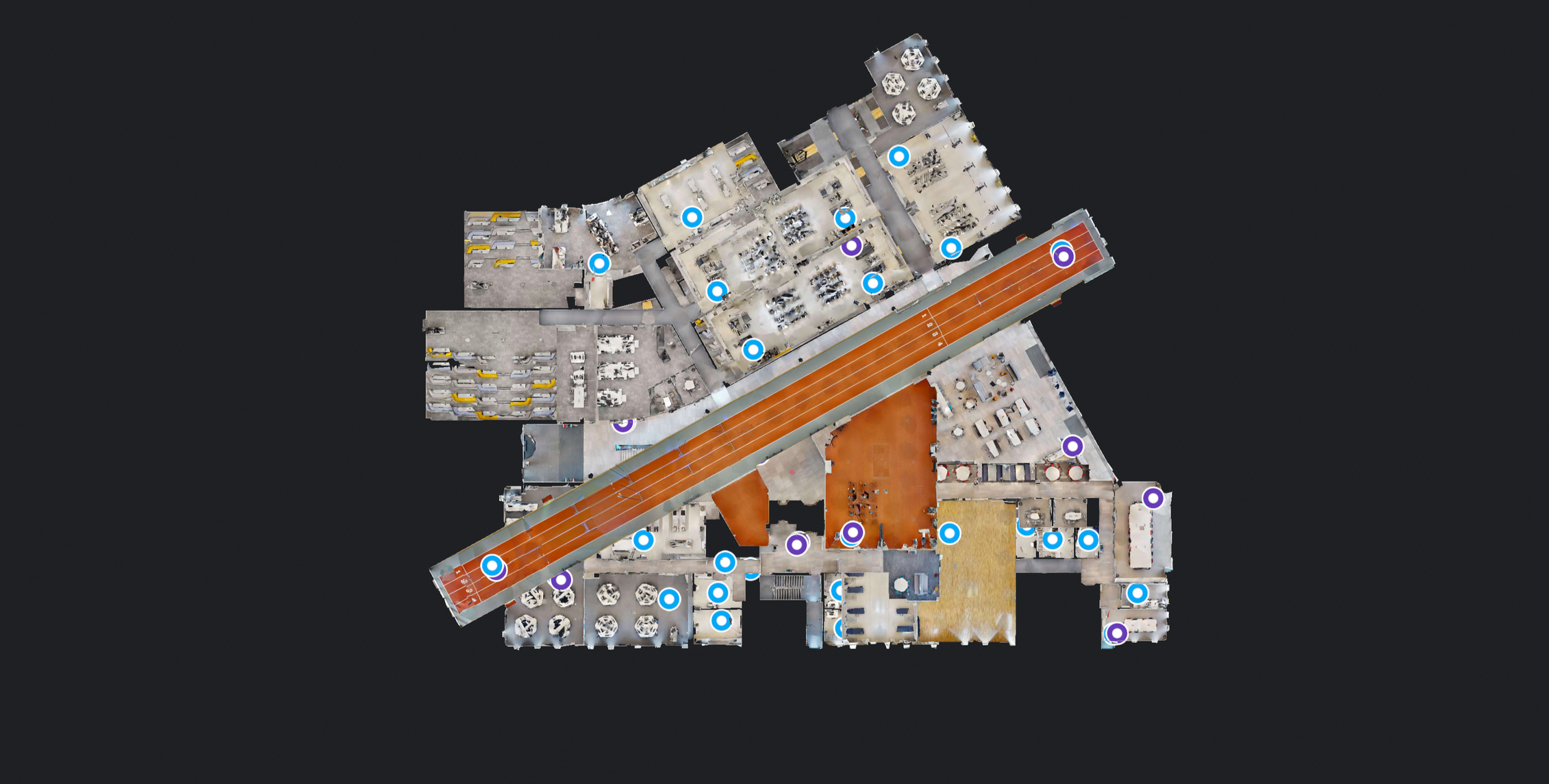
Every structural bay, concealed MEP route, and finishes layer. Captured with professional-grade LiDAR, accurate to within millimetres, and live in the cloud within 24 to 48 hours. Navigable by your architects, engineers, and clients from any device, anywhere.
Built for the way utilities and energy teams actually work.
A living record of every facility and critical asset.
Spatial foundation for predictive condition monitoring.
Inspect, plan and brief without site attendance.
Timestamped, audit-ready evidence base.
Accurate existing conditions for design and works.
Plan refurbishment without going offline.
Pre-site induction and embedded knowledge transfer.
Spatial environmental performance and decarbonisation.
01 Asset documentation & infrastructure records
The most fundamental use case is also the most urgent: knowing what you actually have, where it is, and what condition it's in today.
A Twinflow scan captures every transformer position, switchgear configuration, relay location, cable route, and protective device at the resolution required for engineering decisions. Equipment nameplates, safety signage, and configuration details are all preserved. When an asset is replaced or reconfigured, the next scan captures the change.
In practice
- Capture and maintain as-built records of substations, generation plant, treatment works, and pumping stations
- Document equipment positions and configurations at engineering-grade resolution
- Replace fragmented paper archives, scattered photo folders, and out-of-date drawings
- Link equipment data sheets, maintenance records, and certificates directly to assets in the model
- Maintain a continuously updated baseline reflecting the current state of every asset
02 Proactive maintenance & predictive asset management
Reactive maintenance in utilities is uniquely costly. Twinflow provides the spatial foundation that makes predictive maintenance work.
Assets are documented at the resolution required for meaningful condition monitoring. Timestamped scan comparisons surface trends over time, such as corrosion, insulation degradation, or physical movement, before they escalate into failures. Integrated with IoT sensors and SCADA, the twin becomes a spatial dashboard for live asset condition.
In practice
- Document baseline asset condition as the starting point for ongoing monitoring
- Compare timestamped scans to identify deterioration, movement, or configuration drift
- Brief maintenance teams and contractors via the twin before they mobilise to site
- Integrate CMMS and EAM platforms to connect work orders to physical asset locations
- Layer IoT and SCADA data onto the 3D model for spatial alert context
03 Remote operations & eliminating unnecessary site visits
Energy infrastructure is uniquely challenging to visit. Twinflow eliminates the need for most of those visits.
Engineers, planners, and managers can navigate the facility virtually from a browser, reviewing layouts, verifying measurements, assessing access routes, and inspecting equipment without leaving their desk. For multi-site organisations with assets across a wide geographic area, the time and cost savings compound quickly.
In practice
- Inspect substations, treatment works, and generation sites remotely
- Brief contractors and engineering partners with secure twin access before mobilisation
- Conduct pre-outage planning and switching walkthroughs inside the twin
- Replace routine information-gathering visits for planning and procurement
- Support on-site technicians by navigating the twin collaboratively, in real time
04 Regulatory compliance & audit readiness
Regulatory expectations from OFWAT, Ofgem, the HSE, and equivalent bodies are intensifying. Fragmented, paper-based processes are no longer fit for purpose.
Twinflow transforms compliance readiness from a periodic scramble into a continuous, maintained state. Every scan is timestamped. Every asset is documented. The spatial record is always current and always accessible to any authorised reviewer, including regulators, without requiring a physical site visit.
In practice
- Maintain a continuously updated, timestamped visual record of every regulated asset
- Provide regulators with secure remote access for virtual inspections
- Document safety-critical equipment, isolation points, and emergency systems spatially
- Support NERC, FERC, and equivalent UK and EU regulatory evidence requirements
- Build defensible evidence for incident investigations and insurance claims
05 Capital projects & infrastructure upgrade planning
Grid modernisation, renewable integration, and electrification are driving the largest capital programmes in a generation, on an estate that is ageing and operationally constrained.
Planning capital works on live infrastructure without accurate spatial data is one of the highest-risk activities in the sector. Field conditions routinely diverge from drawings. Clashes are discovered on site. Twinflow provides the accurate, current spatial foundation that capital projects depend on, from first feasibility through to post-works documentation.
In practice
- Capture existing site conditions as the spatial baseline for design and planning
- Validate proposed equipment, cable routes, and structural changes before commitment
- Export point cloud data to CAD, Revit, or GIS for design development
- Coordinate internal teams, contractors, and suppliers on a shared 3D reference
- Document post-works conditions as the updated as-built record
06 Control room & operational facility planning
Control rooms and network operations centres are mission-critical environments where layout decisions directly affect operational performance and safety.
A poorly positioned alarm panel, an obstructed sight line to a critical display, or emergency controls that operators can't locate under pressure are not abstract risks. Twinflow gives engineering and operational teams a spatial platform for reviewing, planning, and optimising these environments without taking them out of service.
In practice
- Document current control room and NOC layouts as the spatial baseline for upgrades
- Review proposed console reconfigurations and display arrangements before commitment
- Support control room consolidation programmes with accurate as-built data
- Map emergency equipment, communication systems, and safety controls spatially
- Onboard new operators to layouts and system locations before their first live shift
07 Workforce training, knowledge transfer & safety
The utilities sector is facing a knowledge transfer crisis. A disproportionate share of the workforce is approaching retirement, taking decades of facility-specific knowledge with them.
Twinflow is the most effective knowledge transfer tool available to utilities organisations today. Expert operational knowledge, equipment characteristics, hazard locations, and emergency protocols can be embedded spatially inside the twin, preserved permanently, and accessed by any team member at any time.
In practice
- Deliver virtual pre-site inductions for new entrants, contractors, and agency staff
- Annotate facilities with embedded SOPs, equipment procedures, and safety data
- Create immersive training for switching, isolation, and emergency response
- Preserve expert knowledge from retiring staff inside the spatial record
- Standardise training content across every site in a multi-site estate
08 Environmental monitoring & net zero compliance
Pressure to demonstrate credible, measurable progress toward net zero is intensifying. Most organisations don't have the data in a form that can be defended under scrutiny.
Twinflow, integrated with environmental monitoring and energy performance data, provides a spatially-referenced platform for tracking, reporting, and improving environmental performance at the asset and portfolio level.
In practice
- Document infrastructure condition as the baseline for decarbonisation investment planning
- Integrate emissions and energy performance data into the spatial model
- Support reporting to Ofgem, the Environment Agency, and other regulators
- Plan renewable integration and network reinforcement against accurate current data
- Build a spatial record of pollution prevention, spill containment, and emissions controls
250+
site visits saved across a four-year, 32-substation modernisation programme through Twinflow-based remote review.
CENTRAL LINCOLN PEOPLE'S UTILITY DISTRICT
We work with your operations, engineering, and H&S teams to scope the survey programme. We identify the facilities, assets, and data outputs that will deliver the greatest value, and plan access windows, PPE requirements, and any permits required to operate in restricted or hazardous zones.
Precision 3D scanning is carried out by trained operators working to your site safety requirements. Scanning is coordinated around operational constraints (planned outages, access windows, maintenance periods) to minimise disruption to live operations.
Scans are processed and published to a secure, cloud-hosted platform within 24 to 48 hours of capture. Assets are tagged with equipment data, documentation, and maintenance information. Access is configured to your security requirements, with role-based permissions ensuring the right people see the right information.
Where required, we connect the digital twin to your CMMS, EAM, SCADA, IoT monitoring, or GIS platforms. Operational data flows into the spatial model, and spatial context feeds back into your existing systems.
Compliance documentation, safety signage, inspection records, and regulatory evidence are embedded spatially inside the twin, creating an always-ready compliance record for regulatory review.
For live operational assets, we provide a rolling scan programme that captures updates after capital works, equipment replacement, or configuration changes to keep the digital twin current. Scan frequency is agreed based on asset criticality and programme activity.
For a utilities organisation with annual capital and maintenance spend of £10 to £50 million, a Twinflow programme represents a fraction of one percent of that investment, while protecting against risks and inefficiencies that regularly consume 10 to 20% of the same budget.
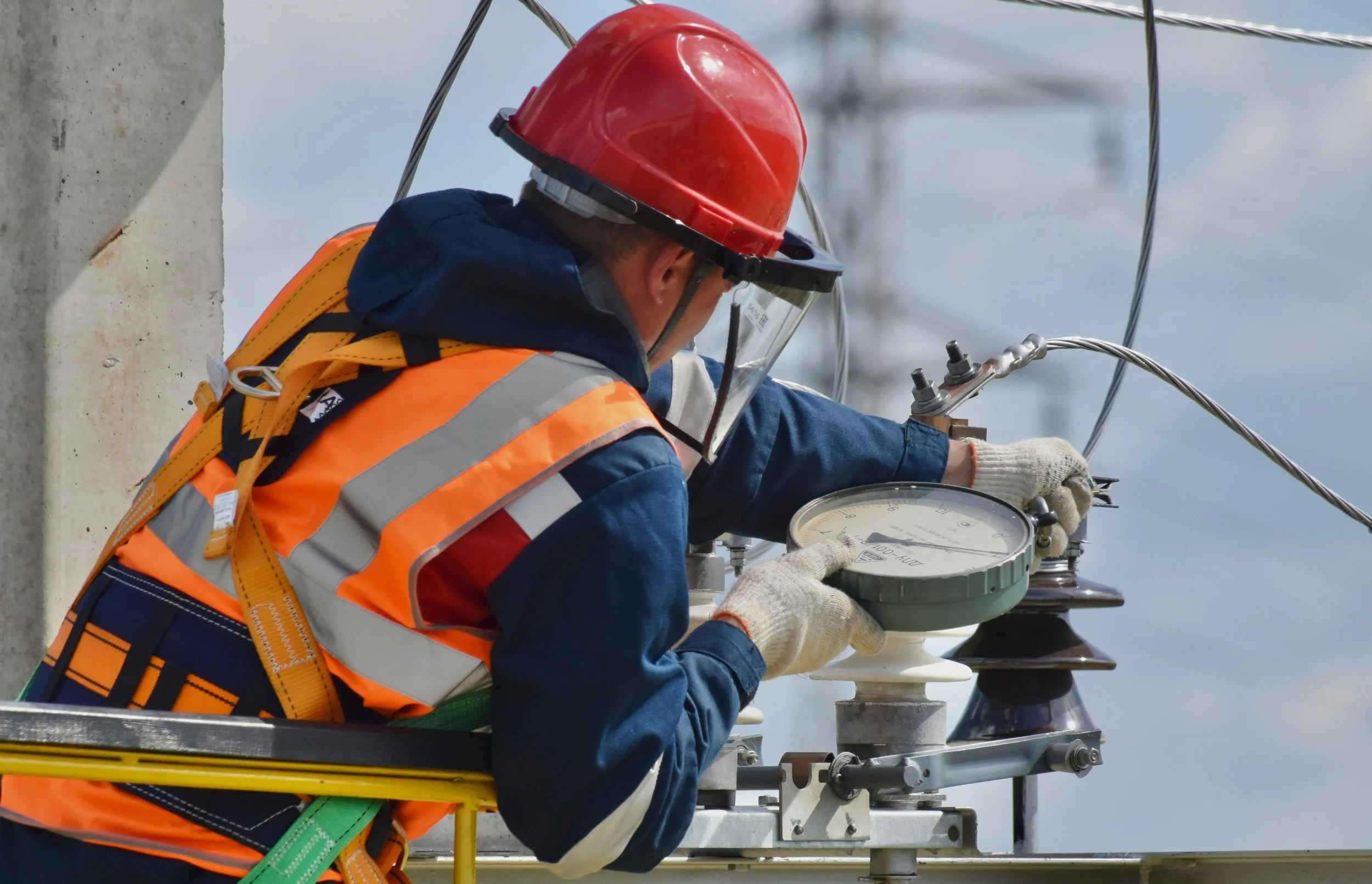
Built across every area of utilities and energy.
Substation documentation, asset condition monitoring, capital works planning, regulatory compliance records, remote inspection.
Generation plant asset documentation, predictive maintenance, capital project support, control room planning, workforce training.
Treatment works documentation, pumping station asset registers, network surveys, environmental compliance records, contractor coordination.
Pipeline and pressure reduction station documentation, asset lifecycle management, safety compliance records, capital project planning.
Wind farm and solar facility documentation, O&M support, capital works planning, investor and lender reporting.
Highly regulated facility documentation, remote inspection support, decommissioning planning, safety case evidence.
Infrastructure documentation, asset lifecycle planning, network expansion planning, operations and maintenance support.
Accurate asset documentation, lifecycle planning, capital works support.
Remote facility access, operational planning, control room management.
Pre-visit briefing, asset documentation, predictive maintenance support.
Safety compliance records, training environments, incident documentation.
Audit-ready documentation, regulatory evidence, timestamped compliance records.
Existing conditions data, contractor coordination, post-works documentation.
Asset condition reporting, capital planning evidence, investor and lender documentation.
The grid is under pressure it was never designed to handle. Your documentation should be built for where it's going next.
Energy demand is growing. Infrastructure is ageing. The workforce that knows these assets best is retiring. We can help.